
National Departments
55 results
Get quotes from multiple providers
Describe your job once and compare quotes from National Departments providers — no payment now.

The mission of the Government Printing Works (GPW) is to provide cost-effective, reliable and timeous services to all spheres of government in printing; deliver equitable information to the public; and disseminate government information through technology, innovation and service excellence. Having invested in modern and world-class printing and data management technology, the GPW is fully equipped to meet its customers' printing needs, offering a comprehensive suite of standard printing, security printing and publishing services to the South African government. The GPW also supports the dissemination of government information to the public. As the editor and publisher of Government Gazettes - the official publications used by government to communicate messages of national importance to the general public - the GPW now also provides its customers with convenient electronic access to submit content, read current gazettes and access all back issues. The GPW's wide range of products and services comprises printing services, security printing and consulting services, gazette services, publications, and government stationery services.

The mission of the Government Pensions Administration Agency (GPAA) is to effectively and efficiently administer fund benefits on behalf of its clients and stakeholders. The GPAA ensures effective, transparent, accountable and coherent governance of the pension funds it administers on behalf of the Government Employees Pension Fund (GEPF) and the National Treasury. The Agency's strategic plan is based on the need to achieve the following: enhancement of administrative capacity; modernisation of processes and systems; enhancement of human capital, including people competence and wellness; meeting of service levels as per service level agreements; and managing of the roles and responsibilities of employer departments with regards to the GPAA.

The mission of the Government Communication and Information System (GCIS) is to deliver effective strategic government communication; set and influence adherence to standards and coherence of message and proactively communicate with the public about government policies, plans, programmes and achievements.

The mission of the Department of Transport (DOT) is to lead the development of integrated efficient transport systems by creating a framework of sustainable policies, regulations and implementable models to support government strategies for economic, social and international development. The objectives that the Department aims to achieve by providing policy framework, regulation and implementation models are: competitive transport costs; safety and security improvements; a reduction in infrastructure backlogs; improvement in access; and a reduction of time in transit.

The mission of the Department of Trade, Industry and Competition (the dtic) is to promote structural transformation, towards a dynamic industrial and globally competitive economy; provide a predictable, competitive, equitable and socially responsible environment conducive to investment, trade and enterprise development; broaden participation in the economy to strengthen economic development; and continually improve the skills and capabilities of the dtic to effectively deliver on its mandate and respond to the needs of South Africa's economic citizens. The department's strategic objectives are to facilitate transformation of the economy to promote industrial development, investment, competitiveness and employment creation; build mutually beneficial regional and global relations to advance South Africa's trade, industrial policy and economic development objectives; facilitate broad-based economic participation through targeted interventions to achieve more inclusive growth; create a fair regulatory environment that enables investment, trade and enterprise development in an equitable and socially responsible manner; and promote a professional, ethical, dynamic, competitive and customer-focused working environment that ensures effective and efficient service delivery.

The Department of Tourism is mandated under the Tourism Act 3 of 2014 to: promote the practise of responsible tourism for the benefit of the country and for the enjoyment of all its residents and foreign visitors; provide for the effective domestic and international marketing of South Africa as a tourist destination; promote quality tourism products and services; promote growth in and development of the tourism sector; and enhance cooperation and coordination between all spheres of government in developing and managing tourism. The National Development Plan (NDP) is the 2030 vision for the country. It recognises tourism as one of the main drivers of employment and economic growth. Tourism is also positioned as one of the six core pillars of growth in the country's New Growth Path (NGP) framework. The National Tourism Sector Strategy (NTSS) provides a blueprint for the tourism sector in the pursuit of growth targets contained in the NGP. Through the Department's NTSS, the tourism sector is committed to creating a total of 225 000 jobs by the year 2020. The Department's objectives include ensuring that benefits of tourism are equitably shared amongst the people of South Africa, and planning for the empowerment of youth, women, and people with disabilities through entrepreneurial participation and opportunities. The Department's focus is on increasing competitiveness within the tourism sector in South Africa. In the medium term, the Department aims to increase investment in the tourism sector, increase inbound tourism, entrench a culture of tourism amongst South Africans, and increase the sector's contribution to job creation and economic growth.

The mission of the Department of Public Service and Administration (DPSA) is to establish norms and standards to ensure that the state machinery functions optimally, and that such norms and standards are adhered to; implement interventions to maintain a compliant and functioning public service; promote an ethical public service through programmes, systems, frameworks and structures that detect, prevent and combat corruption; and contribute towards improved public administration in Africa and internationally through dialogue and sharing of best practices. The Department is required to facilitate and support efforts that seek to, among others, improve service delivery quality and access; human resource management and development; business processes; systems and accountability management; anti-corruption and integrity; and effective public participation.

The Department of Public Works and Infrastructure is committed to the attainment of a transformed built environment sector by: providing strategic leadership to the South African construction and property industries; establishing and ensuring compliance to policy and legislative prescripts for the management of state-owned and leased-in immovable assets, and South African construction and property sectors; providing strategic direction on the integration of public works priorities; and contributing to the national goals of job creation and poverty alleviation through Public Works Programmes. The Property Management Trading Entity, within the Department of Public Works ensures the effective management of the state's immovable assets to contribute towards economic and social development and transformation of the built environment.

The Department of Science, Technology and Innovation (DSI) seeks to boost socio-economic development in South Africa through research and innovation. To achieve its goals, the Department provides leadership, an enabling environment and resources for science, technology and innovation. Through its programmes (administration, technology innovation, international cooperation and resources, research development and support, and socio-economic innovation partnerships) and several entities that work alongside it, the Department is accomplishing groundbreaking science and enhancing the well-being of all South Africans. The Department was renamed from the Department of Science and Innovation to the Department of Science, Technology and Innovation on 27 September 2024.
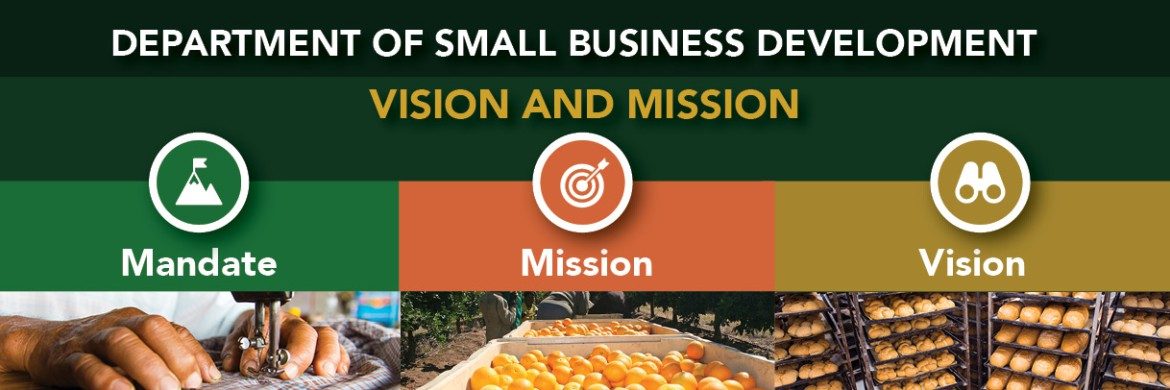
The mission of the Department of Small Business Development is to focus on enhanced support to small business and cooperatives, with an emphasis on programmes to advance entrepreneurship amongst women, the youth, and people with disabilities to contribute to job creation and economic growth. The Department's objectives are to: facilitate the development and growth of small businesses and cooperatives to contribute to inclusive and shared economic growth and job creation through public and private sector procurement; facilitate partnerships with all spheres of government as well as the private sector to ensure mutual cooperation that will benefit small businesses and cooperatives; advocate for a conducive regulatory environment for small businesses and cooperatives to enable access to finance, investment, trade equitable and market access in an and sustainable manner; and facilitate radical economic transformation through increased participation of small businesses and cooperatives in the mainstream economy.
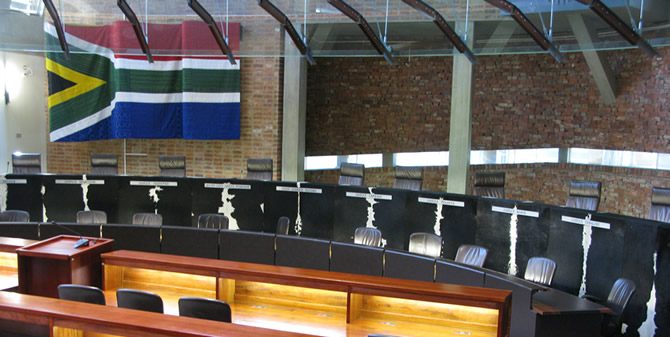
The Constitutional Court of South Africa is the highest court in the country when it comes to the interpretation, protection and enforcement of the Constitution. It deals exclusively with constitutional matters - those cases that raise questions about the application or interpretation of the Constitution. The Constitutional Court has exclusive jurisdiction in deciding disputes about the powers and constitutional status of branches of government. Only the Constitutional Court may: decide disputes between organs of state in the national or provincial sphere concerning the constitutional status, powers or functions of any of those organs of state; decide on the constitutionality of any parliamentary or provincial Bill; decide on the constitutionality of any amendment to the Constitution; and decide that Parliament or the President has failed to fulfill a constitutional obligation.

The Judicial Service Commission (JSC) is a constitutional body established in terms of section 178 of the Constitution read with the Judicial Service Commission Act 9 of 1994. The primary functions of the Commission are to: interview candidates for judicial positions and make recommendations for appointment to the bench; deal with complaints brought against the Judges; manage the Register of Judges' Registrable interests; and advise national government on matters relating to the Judiciary. When the JSC interviews candidates for judicial appointment, all the 23 members of the JSC, as well as the respective Premiers and Judges President of the respective Divisions of the High Court where the candidates have been nominated, participate in the interviews. All interviews for judicial appointment are conducted in public. Following the conclusion of the interviews, the recommendations are sent to the President, who then appoints the recommended candidates as Judges.

The Land Claims Court (LCC) was established in 1996 and its primary focus is dealing with land restitution / land claims cases. The Court deals with restitution cases in the form of referrals from the Commissioner's office or when they come directly through claimants or affected land owners. The main task of the Court in this regard is, therefore, to adjudicate whatever legal issues are contained in the cases and ensure that land is awarded to those who satisfy the statutory requirements. The Court also deals with the Extension of Security Tenure Act and the Labour Tenants Act. These two acts were enacted by Parliament to protect farm dwellers/workers from ill-treatment and illegal evictions. The Land Claims Court was conferred with the jurisdiction thereof. However, the various magistrate courts around the country also have jurisdiction in terms of the Extension of Security Tenure Act, although their orders pertaining evictions are subject to automatic reviews by this court. Primarily, the Court has to ensure that the rights of farm dwellers/workers are protected in that all evictions are done within the framework of the aforementioned legislation. In carrying out its mandate, the Court therefore conducts hearings to adjudicate all matters related to the aforementioned legislation in various provinces, districts, cities and towns of the country.

The mission of the Master of the High Court of South Africa is to provide efficient, cost-effective and specialised services of supervision, custodianship, arbitration and information regarding deceased and insolvent estates and trusts, serving estate practitioners, beneficiaries of estates and trusts, minors, and mentally challenged persons in South Africa for the purpose of safeguarding those beneficiaries'financial and proprietary rights. The Master's office has five main divisions. They all strive to protect the financial interests of persons whose assets or interests are, for various reasons, being managed by others. The Master's offices executes, inter alia, the following functions: regulation and supervision of the administration of estates of deceased and insolvent persons in accordance with the applicable statutory prescriptions; protection of the interests of minors and legally incapacitated persons; protection and administration of the funds of minors, the contractually incapacitated, and undetermined and absent heirs that have been paid into the Guardian's Fund; supervision of the administration of companies and close corporations in accordance with the relevant statutory prescriptions; supervision of the adminitration of trusts; safeguarding of all documentary material received by the Master in respect of estates, insolvencies, liquidations and trusts; processing of enquiries by executors, attorneys, beneficiaries and other interested parties; and appointment of impartial and capable persons as executors, trustees, curators and liquidators.

The mission of the National Prosecuting Authority of South Africa (NPA), guided by the Constitution, is to ensure justice for the victims of crime by prosecuting without fear, favour and prejudice and, by working with their partners and the public, to solve and prevent crime. The National Prosecuting Authority has the power to: institute and conduct criminal proceedings on behalf of the state; carry out any necessary functions incidental to instituting and conducting such criminal proceedings; and discontinue criminal proceedings.
No map locations
These listings don't have coordinates yet.