
State-owned Enterprises(SoEs) in Centurion
7 results
Get quotes from multiple providers
Describe your job once and compare quotes from State-owned Enterprises(SoEs) providers — no payment now.
The Community Schemes Ombud Service (CSOS) was established in terms of the Community Schemes Service Act 9 of 2011 to regulate the conduct of parties within community schemes and to ensure their good governance. Community Schemes are defined in the CSOS Act as "living arrangements where there is shared use of and responsibility for land/buildings such as sectional title, homeowners' associations, retirement housing schemes, share block companies and housing cooperativesâ€. The mandate of the CSOS is to: regulate, monitor and quality assure scheme governance documentation; develop and provide a dispute resolution service; provide training for conciliators, adjudicators and other employees of the CSOS; and take custody of, preserve and provide public access electronically or by other means to scheme governance documentation.
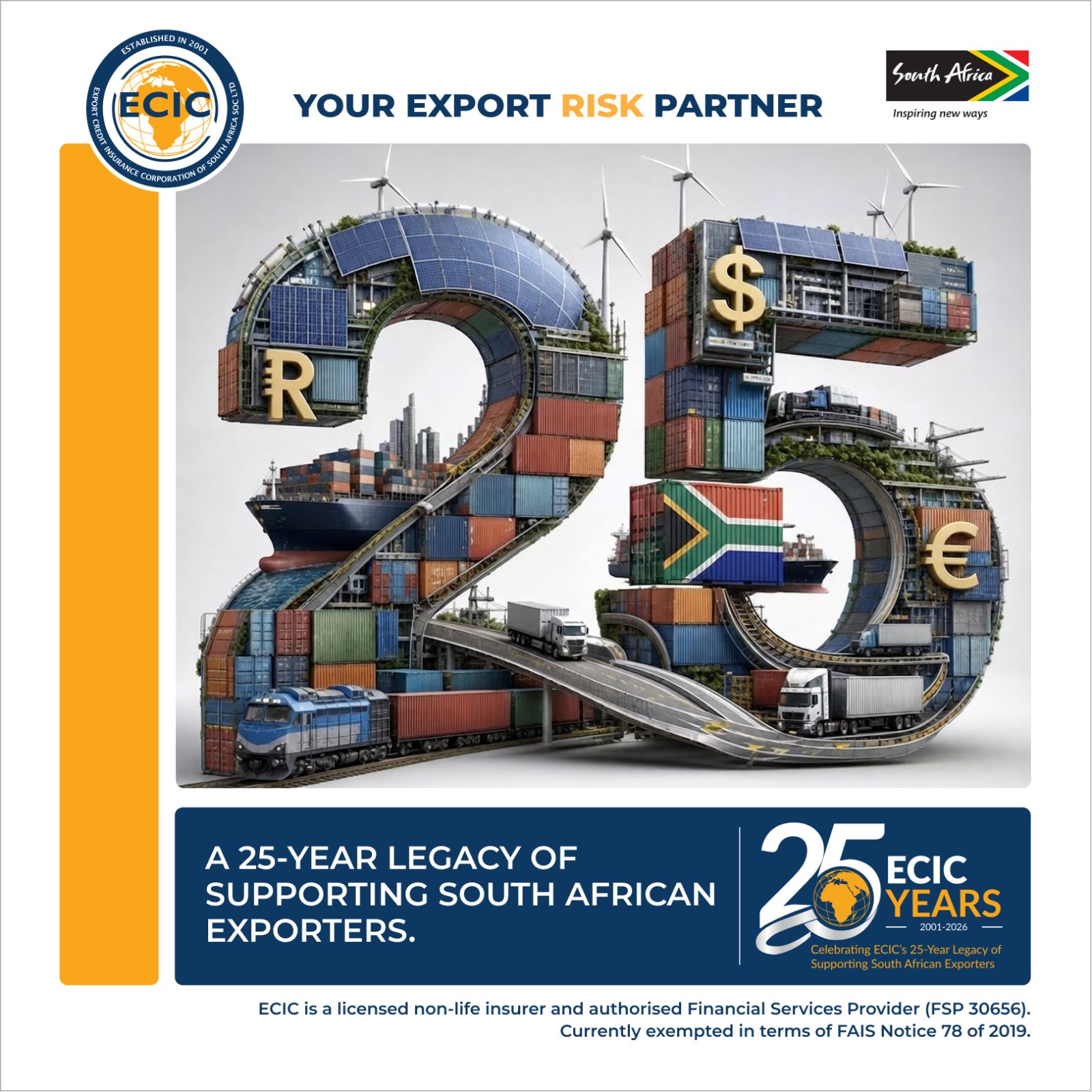
ECIC is a PFMA schedule 3B entity and is subject to the supervision and regulation by the Prudential Authority and Financial Services Conduct Authority in terms of the Insurance Act, 2017. The mission of the Export Credit Insurance Corporation of South Africa SOC Ltd (ECIC) is to provide insurance solutions in support of South African goods and services by applying best practice underwriting and risk management principles. To support this mandate, the ECIC evaluates export credit and foreign investment risks and provides export credit and foreign investment insurance cover on behalf of the government; and underwrites loans, including equity investments for the export of goods and services from South Africa. The ECIC extends its services as far as it can, consistent with preserving the financial viability essential to its long-term support of goods and services; and provides sound and efficient financial services that contribute to public confidence and comply with international standards. Since its inception the mandate of ECIC has been the facilitation of export trade and cross-border investments. Historically, ECIC has been supporting capital goods exports and services. In 2021, the ECIC mandate was expanded beyond capital goods exports. The authorisation to support non-capital goods exports lays the basis for ECIC to insure consumer goods and short-term export transactions with a tenor of less than two years. On 15 May 2024, the ECIC mandate was extended to cover Euro-denominated transactions. This presents new opportunities in new markets addressing the request from both exporters and SA banks.

The mission of the Film and Publication Board (FPB) is to ensure efficient and effective consumer protection through regulation of films, games and certain publications, while empowering the public, especially children, through robust information sharing. The Board regulates the media environment through the classification of content by: maintaining relevance to the values and norms of South African society through scientific research; balancing the right to freedom of expression with an obligation to protect children from exposure to potentially disturbing, harmful and inappropriate materials; and protecting children from sexual exploitation in media content, in order to educate the broader South African society to make informed choices.
The Financial Intelligence Centre (FIC) is South Africa's national centre for the gathering, analysis and dissemination of financial intelligence. The FIC was established to identify proceeds of crime, combat money laundering, and the financing of terrorism and, in so doing, has a primary role to protect the integrity of South Africa's financial system. The Entity was established by the FIC Act 38 of 2001 and reports to the Minister of Finance and to Parliament. The FIC's mandate is to: identify the proceeds of crime, combat money laundering, and terror financing; supervise and enforce compliance with the FIC Act; share information with law enforcement authorities, supervisory bodies, intelligence services, the South African Revenue Service, and other local and international agencies; facilitate effective supervision and enforcement by supervisory bodies; formulate and lead the implementation of policy regarding money laundering and the financing of terrorism; provide policy advice to the Minister of Finance; and uphold the international obligations and commitments required by the country in respect of anti-money laundering and combating financing of terrorism (AML/CFT). The FIC Act introduces a regulatory framework of measures that requires certain categories of business to take steps regarding client identification, record-keeping, reporting of information and internal compliance structures. All businesses have to report various suspicious transactions to the FIC. It also receives additional financial data from accountable and reporting institutions. The Entity uses this financial data and available data to develop financial intelligence. It is able to make this intelligence available to law enforcement, police, and tax authorities for follow-up investigations. On 1 December 2010, amendments to the FIC were promulgated, which required that all accountable and reporting institutions register with the FIC. Furthermore, the Act gave the Entity and supervisory bodies the authority to inspect and impose administrative penalties on non-compliant businesses. The Act also introduced an appeals process and an appeal board. South Africa is a member of the Financial Action Task Force, the international body which sets standards and policy on anti-money laundering and for combating the financing of terrorism (AML/CFT). The FIC currently leads the South African delegation of various government departments to the Eastern and Southern Africa Anti-Money Laundering Group, which aims to support countries to implement the global AML/CFT standards. The FIC is a member and current chair of the Egmont Group, which is made up of financial intelligence units from 147 countries around the world. The primary aim of the organisation is to facilitate cooperation and sharing of financial intelligence information among its members.
The Council for Medical Schemes (CMS) regulates the medical schemes industry governed by the Medical Schemes Act 131 of 1998. A state entity reporting to the Minister of Health, CMS' mandate is to protect the interests of the beneficiaries at all times as well as control and coordinate the functioning of medical schemes in a manner that is complementary with national health policy. The CMS makes recommendations to the Minister on criteria for the measurement of quality and outcomes of the relevant health services provided for by the medical schemes, and such other services as the Council may from time to time determine. The Council investigates complaints and settles disputes in relation to the affairs of medical schemes as provided for in this Act, as well as collects and disseminates information about private healthcare. The CMS makes rules, not inconsistent with the provisions of this Act, for the purpose of the performance of its functions and exercise of its powers. The Council advises the Minister on any matter concerning medical schemes and performs any other functions conferred on the Council by the Minister or by this Act.
The Judicial Inspectorate for Correctional Services (JICS) is an organ of the South African Government, whose mandate is to uphold and protect the rights of all inmates who are incarcerated. JICS is responsible for the independent oversight of the Department of Correctional Services and must therefore report thereon to the Ministry of Justice, Correctional Services and the portfolio committee.
The National Consumer Tribunal (NCT) was established in terms of the National Credit Act 34 of 2005. As an independent adjudicative entity, the Tribunal's mandate is to hear and decide on cases involving consumers, service providers, credit providers, debt counsellors and credit bureaux. The NCT is also responsible for reviewing decisions made by the National Credit Regulator and the National Consumer Commission.
No map locations
These listings don't have coordinates yet.
Can't find the business?
Adding a business to Insly is always free.
Get free quotes from State-owned Enterprises(SoEs) in Centurion
Tell us what you need and get quotes from businesses that respond fast.
Related searches in Centurion
Trending searches in Centurion
- Opera & Ballet in Centurion
- Doctors in Centurion
- Donuts in Centurion
- Empanadas in Centurion
- Behavior Analysts in Centurion
- Baby Gear & Furniture in Centurion
- Flooring in Centurion
- Food Delivery Services in Centurion
- Lawyers in Centurion
- Auto Glass Services in Centurion
- Staffing Solutions in Centurion
- Planetarium in Centurion
- Hypnosis/Hypnotherapy in Centurion
- Acne Treatment in Centurion
- Dentists in Centurion
- Ayurveda in Centurion
- Accountants in Centurion
- Commercial Truck Repair in Centurion
- Grout Services in Centurion
- Banks & Credit Unions in Centurion
- Fire Protection Services in Centurion
More nearby
- Body Contouring in Centurion
- Beer, Wine & Spirits in Centurion
- Venues & Event Spaces in Centurion
- Fireplace Services in Centurion
- Pizza in Centurion
- Catering Equipment in Centurion
- Music Venues in Centurion
- Day Spas in Centurion
- Country Clubs in Centurion
- Fashion in Centurion
- Cafes in Centurion
- Insurance in Centurion
State-owned Enterprises(SoEs) in nearby cities
Frequently asked questions
What did people search for similar to state-owned enterprises(soes) in Centurion?
People also searched for these in Centurion:
- Associations