
Public Services & Government in Gauteng
30 results
Sub-categories
Get quotes from multiple providers
Describe your job once and compare quotes from Public Services & Government providers — no payment now.
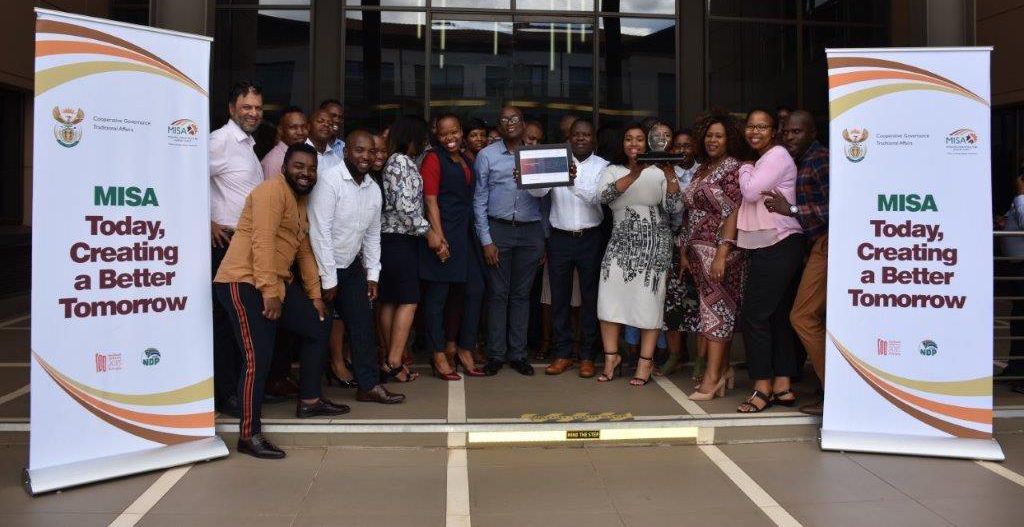
The mission of the Municipal Infrastructure Support Agent (MISA) is to provide support and develop technical capacity towards sustained accelerated municipal infrastructure and service delivery. The Agent's purpose is to: provide leadership, strategic direction, management and administration services to the organisation; and provide technical support to targeted municipalities, which will improve infrastructure planning, implementation, as well as operations and maintenance. MISA also manages deployment of professional service providers to municipalities, ensuring that sufficient technical capacity is built within municipalities, which will result in effective and efficient service delivery in the long term. This includes all training administration activities, and provides comprehensive generic strategic support to the Technical Support and Capacity Development Programmes, which will allow them to focus exclusively on the core functions.

The mission of the National Gambling Board South Africa (NGB) is to lead the regulation of the gambling industry in the fulfillment of the National Gambling Act (NGA) 7 of 2004 through an effectively regulated and supervised gambling industry that upholds domestic, continental and internationally recognised standards of compliance. Overseein
Ekurhuleni Metropolitan Municipality is the local authority and government for Gauteng, South Africa's former East Rand area. Offers news, tourism and municipal information.
The Commission for Gender Equality (CGE) is an independent statutory body established in terms of Chapter 9 of the Constitution of the Republic of South Africa, 108 of 1996. The mission of the Commission for Gender Equality is to promote, protect, monitor and evaluate gender equality through research, public education, policy development, legislative initiatives, effective monitoring and litigation. The CGE's functions include: monitoring and evaluating the policies and practices of government, the private sector and other organisations to ensure that they promote and protect gender equality; public education and information; reviewing existing and upcoming legislation from a gender perspective; investigating inequality; commissioning research and making recommendations to Parliament or other authorities; investigating complaints on any gender-related issue; and monitoring/reporting on compliance with international conventions.
The Culture, Arts, Tourism, Hospitality and Sport Sector Education and Training Authority (CATHSSETA) was established under the Skills Development Act 97 of 1998 (the Skills Act) for the tourism, hospitality and sports economic sector. CATHSSETA's main function is to contribute to the raising of skills - to bring skills to the employed, or those wanting to be employed, in their sector. They achieve this by ensuring that people learn skills that are needed by employers and communities. There is no value in training people if they cannot use the skills they have learnt. Training and skills development is not just for young people starting out in the working world, though it is important for them, it is also there to enhance the skills of people who are already employed.
Established by the Constitution of South Africa, the Electoral Commission (IEC) of South Africa is an independent body that manages elections of legislative bodies and institutions through the participation of citizens, political parties and civil society. The IEC's obligations are to: manage elections of national, provincial and municipal legislative bodies; ensure that those elections are free and fair; declare the results of those elections; and compile and maintain a national common voters' roll. The Commission's duties are to: ensure that any election is free and fair; promote conditions conducive to free and fair elections; compile and maintain a national common voters' roll; compile and maintain a register of parties; establish and maintain liaison and cooperation with parties; undertake and promote research into electoral matters; develop and promote the development of electoral expertise and technology in all spheres of government; continuously review electoral laws and proposed electoral laws, and make recommendations; promote voter education; declare the results of elections for national, provincial and municipal legislative bodies within seven days; and appoint appropriate public administrations in any sphere of government to conduct elections when necessary.
The Pan South African Language Board (PanSALB) was established in order to promote and create conditions for the development and use of official languages, the Khoe and San languages, and sign language; and to promote and ensure respect for all languages commonly used by communities in South Africa, including German, Greek, Gujarati, Hindi, Portuguese, Tamil, Telegu and Urdu, and Arabic, Hebrew, Sanskrit, and other languages used for religious purposes in South Africa.
The mission of the Public Protector South Africa is to strengthen constitutional democracy in pursuit of its constitutional mandate by investigating, rectifying and redressing any improper or prejudicial conduct in state affairs and resolving related disputes through mediation, conciliation, negotiation and other measures to ensure fair, responsive and accountable public sector decision-making and service delivery. In pursuit of the mandate, vision and mission, the Public Protector focuses on the following strategic objectives: to be accessible to and trusted by all persons and communities; prompt remedial action; promotion of good governance in the conduct of all state affairs; an efficient and effective organisation; and an optimal performance and service-focused culture.
The Media, Information and Communication Technologies Sector Education and Training Authority (MICT SETA) is a skills development institution established in terms of the Skills Development Act of 1998, to generate, facilitate and accelerate the processes of quality skills development at all levels in the MICT sector in South Africa. The MICT sector is made up of five subsectors that are interconnected but also quite distinct and identifiable in their own right. These are: advertising, film and electronic media, electronics, information technology and telecommunications. The MICT SETA intends to engage in learning programmes and quality assurance of education and training of implemented learning initiatives, which lead to employment and new venture creation, while at the same time engaging in programmes that assist in bridging the digital divide, especially in rural areas.
The Safety and Security Sector Education and Training Authority (SASSETA) serves the safety and security environment of South Africa with the facilitation of skills development and qualifications. It promotes a culture of ongoing learning, and creates opportunities for skills transfer for all South Africans seeking recognised industry qualifications.
The Wholesale and Retail SETA (W&RSETA) is the skills development authority in the wholesale and retail sector. The W&RSETA has contributed to the skills revolution through innovative and trailblazing programmes and projects for over 24 years, to reaffirm wholesale and retail as a major employer, one of the pillars of the South African economy, and to create self-employment opportunities. The mission of the W&RSETA is to develop a skilled, capable, competent and professional workforce to transform the wholesale and retail sector. Its vision is to be the leader in skills development in the country.
The mission of the Border Management Authority is to be a credible provider of highly efficient, integrated, well-coordinated, and technology-driven border law enforcement services that contribute to national security and socio-economic development by inculcating a culture that empowers teams for service excellence. In pursuit of the mandate, vision and mission, the Border Management Authority focuses on being a world-class integrated border law enforcement authority partnering for a safe and prosperous South Africa.
The mission of Boxing South Africa (BSA) is the effective and efficient administration and regulation of professional boxing, by: ensuring and safeguarding the health, safety and general well-being of professional boxers; promoting, marketing and sanctioning quality boxing events and tournaments to increase the sport's popularity with athletes, supporters and sponsors; credibly rating boxers and training licensees; positioning Boxing South Africa as a point of reference for international sanctioning bodies in South Africa and ensuring that BSA fulfils its role as a custodian of the best interests and concerns of all South African boxers at home and on the international front; improving the stature of national and provincial titles; and coordinating the activities of all boxing stakeholders in the country for the purposes of unifying the sporting codes and managing their expectations with integrity. Boxing SA's statutory mandate is to: give effect to the provisions of the Constitution; regulate, control and exercise general supervision over professional boxing at tournaments in the country; protect and regulate the interests and organizational rights of boxers, trainers, mangers, promoters, officials and stakeholders involved in professional boxing matters; and promote orderly collective action, boxing in the country, and the effective resolution of boxing disputes.
The Strategic Economic Infrastructure Investment Programme (SEIIP) of the Gauteng Provincial Government makes provision for the establishment of an Industrial Development Zone (IDZ). In 2002, the Minister of Trade and Industry designated three pieces of land totalling 725 hectares, to this purpose. The land is located in and around the OR Tambo International Airport (ORTIA), which was selected due to its strategic role in logistics and trade within the province. The Gauteng Industrial Development Zone (GIDZ) Development Company was formed to develop and operate the ORTIA IDZ. The purpose of the ORTIA IDZ is to provide an efficient import and export duty-free zone for high value added, light manufactured goods that are exported via air freight. The subsidiary's vision is to contribute towards the transformation, development and growth of post-minerals extraction processing and beneficiation industry sectors. Through this IDZ Development Programme, the GGDA subsidiary aims to provide a destination for strategic investments from and within export manufacturing industries.
No map locations
These listings don't have coordinates yet.