
Public Services & Government in Gauteng
30 results
Sub-categories
Get quotes from multiple providers
Describe your job once and compare quotes from Public Services & Government providers — no payment now.

The Academy of Science of South Africa (ASSAf) aspires to be the apex organisation for science and scholarship in South Africa, recognised and connected both nationally and internationally. Through its membership, which represents the collective voice of the most active scholars in all fields of scholarly enquiry, ASSAf aims to generate evidence-based solutions to national problems. The mission of the Academy is to: recognise scholarly achievement and excellence in the application of scientific thinking for the benefit of society; mobilise members to ensure that they are available to contribute their expertise in the service of society; conduct systematic and evidence-based studies on issues of national importance, producing authoritative reports that have a significant impact on policy-making; promote the development of an indigenous system of South African research publications, increasing their quality, visibility, accessibility and impact; publish science-focused periodicals that will showcase the best of southern African research to a wide national and international audience; develop productive partnerships with national, regional and international organisations with a view to building its capacity in science and its application within the National System of Innovation (NSI); create diversified sources of funding for sustainable functioning and growth of a national academy; and communicate effectively with relevant stakeholders through various media and fora.

The mission of the Food and Beverage Manufacturing Industry Sector Education and Training Authority (FoodBev SETA) is to ensure that: relevant and quality learning standards and qualifications are available in this sector; a high quality of learning provision is maintained in this sector; and access to knowledge and skills is improved for all in the sector. FoodBev SETA's function is to promote, facilitate and incentivise skills development in the food and beverages manufacturing sector.

Agrement South Africa (ASA) was established in terms of a delegation of Authority from the then Minister of Public Works in July 1969. The organisation is an entity of the National Department of Public Works and Infrastructure (NDPWI), and its mandate is within the built environment domain. As such, the legislation and mandates that impact the built environment and public works guide the functioning and operations of Agrement South Africa. The organisation is a schedule 3A public entity under the Public Finance Management Act and is established under the Agrement South Africa Act 11 of 2015. Agrement South Africa's vision is to be the leading regulator on non-standardised construction-related products and systems in South Africa. The organisation's mission is to enhance its position as an impartial and internationally acknowledged South African centre of excellence to: provide assurance to specifiers and users of the fitness-for-purpose of non-standardised construction -related products or systems; support and promote integrated socio-economic development in the Republic as it relates to the construction industry; support and promote the introduction and use of certified non-standardised construction related products or systems in the local or international market; and support policymakers to minimise the risk associated with using non-standardised construction related products or systems. The core mandate of ASA is the technical assessment and issuing of approval of certificates for non-standardised construction-related products and systems for which there are no South African National Standards. Assess and, if satisfied, certify the fitness-for-purpose of a non-standardised construction-related product or system; issue, amend, suspend, reinstate, withdraw or renew an ASA Certificate; enter into an agreement with a person, entity or organ of the State whose services are required to achieve an object or perform a function of ASA or the Board; provide services about the objects of ASA to a person, entity or organ of the State; exercise any other power as may be prescribed or necessary to achieve the objects of ASA; the recognised South African National Government Body that issues eco-labels for building materials and products; and the recognised South African National Government Body that issues Green Building Ratings for Government Buildings.

The mission of the Agricultural Research Council (ARC) is to be a premier science institution that conducts research with partners, develops human capital and fosters innovation to support and develop the agricultural sector. The ARC's main functions are to: undertake and promote research, technology development and technology transfer; utilise the technological expertise in its possession and make it generally available; publish information concerning its objectives and functions, and establish facilities for the collection and dissemination of information in connection with research and development; publish the results of research; establish and control facilities in the fields of research, technology development and technology transfer that the Council may determine from time to time; cooperate with departments of state, institutions, persons and other authorities for the promotion and conduct of research, technology development and technology transfer; promote the training of research workers by means of bursaries or grants-in-aid for research, technology development and technology transfer, and contribute financially; offer research, development and technology transfer programmes; hire or let facilities; and cooperate with persons and authorities in other countries conducting or promoting research, technology development and technology transfer in agriculture.

The mission of Air Traffic and Navigation Services SOC Ltd (ATNS) is to provide safe, expeditious and efficient air traffic management solutions and associated services while ensuring long-term economic, social and environmental sustainability. ATNS is responsible for air traffic control in approximately 6% of the world's airspace. Their services extend further than the familiar air traffic control service, into the provision of vitally important aeronautical information used for all flight planning purposes, as well as search and rescue coordination activities and the maintenance of a reliable navigation infrastructure. Their operations also include the supply of aeronautical information services, technical maintenance and aerodrome services; alert, search and rescue coordination services; management of the flexible use of airspace through the Central Airspace Unit (CAMU); support for special events, and special requirements such as test flights and demonstration flights; the implementation and maintenance of a terrestrial-based navigational structure; and the training of licensed air traffic controllers and technical staff through the Aviation Training Academy (ATA).

The mission of Airports Company South Africa SOC Ltd (ACSA) is to develop and manage world-class airports for the benefit of all stakeholders. The Company's strategy is built on collaborative and coherent engagements with its stakeholders. The Company focuses on strengthening its internal business processes and making the most of its bespoke information technology. ACSA directs its efforts towards improving its employees' skills and understanding as part of its effort to build human capital.

The core mission of the Transport Education Training Authority (TETA) is to build a forward-thinking and globally competitive workforce by facilitating skills development programmes that support the outcomes of the NSDP and respond to emerging skills needs of the transport sector. TETA's primary functions are: to develop a sector skills plan (SSP); facilitate the development, registration and implementation of learnerships, skills programmes and strategic initiatives; approve workplace skills plans (WSPs); disburse grants to stakeholders; and conduct quality assurance on education and training that falls within the scope of the sector.

The vision of the Council on Higher Education (CHE) is to be a dynamic organisation contributing to a transformed, equitable and quality higher education and training system in South Africa. Its mission as the independent statutory quality council for South African higher education, is to: lead and manage quality assurance; research and monitor trends and development; initiate critical discourse on contemporary higher education issues; and provide advice to the Minister on strategy and policy. The main areas of work of the CHE are to: provide advice to the Minister of Higher Education and Training on all higher education matters on request, and proactively; promote a system of quality assurance for all higher education institutions, including private providers of higher education, which focuses on programme accreditation, institutional audits, national reviews, standards development, quality promotion and capacity development; monitor the state of higher education and publish information regarding developments in higher education on a regular basis; and contribute to the development of higher education through intellectual engagement with key issues in a number of activities in partnership with relevant stakeholders.

The mission of the Development Bank of Southern Africa (DBSA) is to advance the development impact in the region by expanding access to development finance, and effectively integrating and implementing sustainable development solutions. The DBSA's purpose is to accelerate sustainable socio-economic development, and improve the quality of life of the people of the Southern African Development Community (SADC) and, more recently, the whole of the African continent, by driving financial and non-financial investments in the social and economic infrastructure sectors: social infrastructure - infrastructure aimed at addressing backlogs and expediting the delivery of essential social services to support sustainable living conditions and a better quality of life within communities; and economic infrastructure - infrastructure aimed at addressing capacity constraints and bottlenecks in order to optimise economic growth potential and support regional integration. The DBSA has prioritised water, energy, transport and ICT as its key focus areas.

The vision of the Education Labour Relations Council (ELRC) is to improve the quality of teaching and learning through labour peace. The ELRC is a bargaining council that serves the public education sector nationally and provincially. The primary business of the ELRC is to promote the maintenance of labour peace in the public education sector, through the provision of dispute resolution and prevention services. The secondary business of the ELRC is to promote the maintenance of labour peace in the public education sector through the facilitation of negotiations between trade unions and the state as the employer. The Council's strategic outcome-orientated goals are to: provide an evidence base for improved policies and policy implementation in basic education through research and monitoring, and evaluation activities; attach equal importance to proactive dispute prevention and dispute resolution; maximise the scope of parties' shared interest through collective bargaining processes; provide appropriate support and training for all involved in dispute resolution and collective bargaining; and support and complement the core activities of the Council through sound communication strategies, special initiatives and campaigns.

The Government Employees Pension Fund (GEPF) is a Defined Benefit pension fund that was established in May 1996, when various public sector funds were consolidated. The Fund's core business is to oversee pensions and other benefits for government employees in South Africa. The GEPF appoints the Government Pensions Administration Agency (GPAA) to administer benefits on behalf of the Fund and the Public Investment Corporation SOC Limited (PIC) as asset manager to invest on behalf of the Fund.

The Gauteng Department of Human Settlements' vision, mission and values for the sixth term of administration are informed by the following principles: consistent mandate of the Department regarding integrated and sustainable human settlements; undertaking by government to improve on its successes over the past 25 years, and the previous fifth term of administration in particular; strategic paradigm shift away from sporadic and uncoordinated development to purposefully planned and developed mega projects that are completely self-sufficient in providing for the housing, social and economic needs of the community; development of human settlements that mainstream economic development, and social cohesion, consolidate inter-governmental, stakeholder collaboration and relationships; achieving the outcome of a spatially just and transformed space economy that enables equal access to social services and economic opportunities in cities, regions and rural areas. This emphasis has been based on the fact that "spatial integration, human settlements and local government†is one of the seven national priorities as mentioned in the State of the Nation Address, which also state that efforts to identify and release public land that is suitable for smart, urban settlements will be accelerated. This is in alignment with the five provincial priorities for the sixth term of administration as mentioned in the State of the Province Address, namely, "integrated mega human settlements and land release.

The vision of the Gauteng Department of Infrastructure Development is to be the trusted provider of integrated and smart public infrastructure and property management solutions that transform the spatial landscape and improve the quality of life of the citizens of Gauteng. The new mandate and strategy of the Department are the priorities focused on the following key programmes: property management, infrastructure delivery, facilities and maintenance management, economic development and job creation, coordination of EPWP, and building a high performance, capable and well governed organisation.
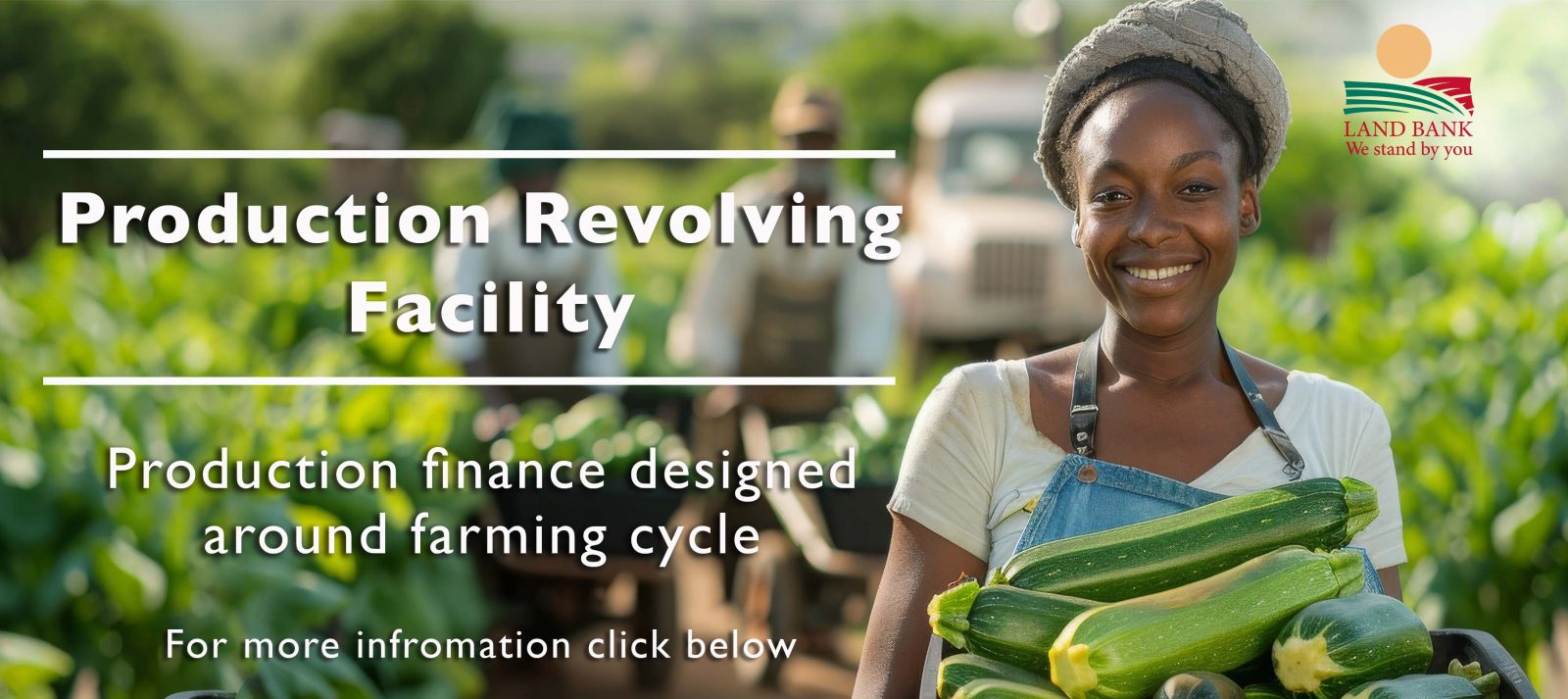
The Land and Agricultural Development Bank of South Africa (Land Bank) is a specialist agricultural bank established in 1912. The Bank's objective is to serve South Africa's commercial and emerging farmers by bringing specially designed financial services within their reach. These services enable farmers to finance land, equipment, improve assets and obtain production credit. Land Bank's vision is to be a world-class agricultural development bank that stimulates growth, drives solid performance and spurs innovation. The vision is realised through the quest to work with all stakeholders in building an adaptive and competitive agricultural sector that drives environmental, social and economic growth and development, thus contributing to food security.

The Mine Health and Safety Council (MHSC) is a national public entity (Schedule 3A) established in terms of the Mine Health and Safety Act, 29 of 1996, as amended. The entity comprises a tripartite board represented by state, employer and labour members under the chairmanship of the Chief Inspector of Mines. The MHSC is funded by public revenue and is accountable to Parliament. The main task of the Council is to advise the Minister of Mineral Resources on occupational health and safety legislation and research outcomes focussed on improving and promoting occupational health and safety in South African mines. The Mine Health and Safety Council has been in existence since 1997. It has provided a playform for engagement for the tripartite stakeholders. It continues to be the trusted advisor to the Minister of Mineral Resources and the mining industry at large on occupational health and safety issues. The MHSC is currently in the process of implementing the Centre of Excellence on mine occupational health and safety, which is a game changer in how MHSC is going to conduct its business.
No map locations
These listings don't have coordinates yet.
Can't find the business?
Adding a business to Insly is always free.
Get free quotes from Public Services & Government in Gauteng
Tell us what you need and get quotes from businesses that respond fast.
Related searches in Gauteng
Trending searches in Gauteng
- Banks & Credit Unions in Gauteng
- Doctors in Gauteng
- Auto Glass Services in Gauteng
- Empanadas in Gauteng
- Ayurveda in Gauteng
- Behavior Analysts in Gauteng
- Grout Services in Gauteng
- Flooring in Gauteng
- Acne Treatment in Gauteng
- Lawyers in Gauteng
- Donuts in Gauteng
- Body Contouring in Gauteng
- Fire Protection Services in Gauteng
- Dentists in Gauteng
- Hospitals in Gauteng
- Hypnosis/Hypnotherapy in Gauteng
- Venues & Event Spaces in Gauteng
- Commercial Truck Repair in Gauteng
- Baby Gear & Furniture in Gauteng
- Country Clubs in Gauteng
- Fireplace Services in Gauteng
More nearby
Public Services & Government in nearby cities
Frequently asked questions
What did people search for similar to public services & government in Gauteng?
People also searched for these in Gauteng:
- SETAs
- State-owned Enterprises(SoEs)
- Constitutional Bodies
- National Departments