
Public Services & Government in Pretoria
41 results
Sub-categories
Get quotes from multiple providers
Describe your job once and compare quotes from Public Services & Government providers — no payment now.

The mission of the Accounting Standards Board (ASB) is to serve the public interest by setting standards of Generally Recognised Accounting Practice (GRAP) and providing guidance for financial and other performance information reported by the public sector. The Board has the following responsibilities: determine the work programme and approve the appointment of members of project groups; approve the standards to be issued as standards of GRAP for the preparation of annual financial statements of all spheres of government; prepare and publish directives, interpretations and guidelines concerning the standards of GRAP; recommend to the Minister of Finance effective dates for the implementation of these standards by different categories of institutions to which these standards apply; perform any other function incidental to advancing financial reporting in the public sector; and issue and publish recommended practices on its own authority, if satisfied as to need, usefulness and practicality, following a process of consultation with stakeholders.

The vision of the African Renaissance and International Cooperation Fund (ARF) is a democratic, non-racial, non-sexist, conflict-free, developmental African continent. The ARF is committed to promoting South Africa's national interests and values, the African Renaissance and the creation of a better world for all. In order to ensure that funding through the ARF is effective, the ARF has adopted the values of the Paris and Rome declarations on aid effectiveness. The ARF will ensure that the following key values are adhered to: the recipient country must take ownership of the process of determining the immediate-, medium- and long-term actions that will address the issues contained in its project proposal; the recipient country must achieve an understanding of the political, economic and security considerations; and a needs assessment should be conducted with direct involvement and ownership of the process by the country concerned. Integrated planning and coordination are critical in ensuring that South Africa's efforts are in line with the development needs of the identified country. In addition to the above, the ARF will conduct its business while constantly adhering to the values of the Department of International Relations and Cooperation (DIRCO), namely: patriotism, loyalty, dedication, Ubuntu, constitutional values (Chapter 10) and Batho Pele. The aim of the African Renaissance and International Cooperation Fund is to: enhance cooperation between the Republic and other countries, in particular African countries, through the promotion of democracy, good governance, the prevention and resolution of conflict, socio-economic development and integration, humanitarian assistance and human resource development; to repeal three Acts; and to provide for matters incidental thereto.

The objective of the Agricultural Produce Agents Council (APAC) is to regulate the occupations of fresh produce, export and livestock agents and to maintain and enhance the status and dignity of those occupations and the integrity of persons practicing those occupations. The Council's mission is to: fulfil its mandate under the Act; protect against dishonest practices; uphold its responsibility to maintain and enhance the occupations of fresh produce, export and livestock agents; and position the Council to effectively contribute in the development and transformation of the agricultural sector. APAC's vision is to be an innovative, supportive, proactive and responsive regulatory body.
Its mission is to provide strategic direction and high-quality services while safeguarding the environment, cultural heritage, and communities for sustainable development. Its goals are to deliver quality infrastructure and innovative asset management for long-term economic growth.
The Public Service Sector Education and Training Authority (PSETA) is a statutory body entrusted with driving skills development across the public sector. As mandated by the Skills Development Act and aligned with the National Skills Development Plan (NSDP) 2030, PSETA plays a critical role in shaping a professional, ethical and capable public service workforce. As the designated sector education and training authority, PSETA leads transversal functions across national and provincial departments, legislatures, public entities and government-exclusive institutions. It ensures that skills planning, programme development and quality assurance are strategically aligned with the state's evolving needs. Through its value chain – spanning research and skills planning, programme design, quality assurance, stakeholder partnerships, and performance monitoring – PSETA ensures the public sector is equipped with the right skills to deliver on government priorities. It develops qualifications, accredits providers, certifies learners, and supports critical programmes like learnerships, internships and artisan development. As a trusted authority, PSETA is committed to driving impactful, inclusive and sustainable skills development that strengthens institutional capacity and supports service delivery excellence across the public sector.

The Centre for Public Service Innovation (CPSI) is mandated to develop innovative, sustainable and responsive models for improved service delivery. The work of the CPSI is guided by an understanding of innovation in a public sector context as 'the creation and implementation of new and service delivery solutions (systems, processes, methods, models, products and services) resulting in significant improvements in outcomes, efficiency, effectiveness and quality'. The CPSI facilitates unearthing, development and implementation of innovative ideas within and throughout the public service. It achieves this by facilitating pilot projects aimed at demonstrating the value of innovative solutions, and through activities that create an enabling environment within the public sector to support and sustain innovation. The CPSI's cross-sector reach makes it a resource for the whole of government, thus bridging institutional boundaries. Through active research and knowledge sharing platforms and products, the CPSI identifies and shares lessons and information on innovation trends nationally, across Africa and internationally. The CPSI partners with a range of individuals and institutions in government, business and the community in exciting and mutually beneficial ways. This partnership model allows us to leverage financial and/or intellectual capital in support of government priorities.
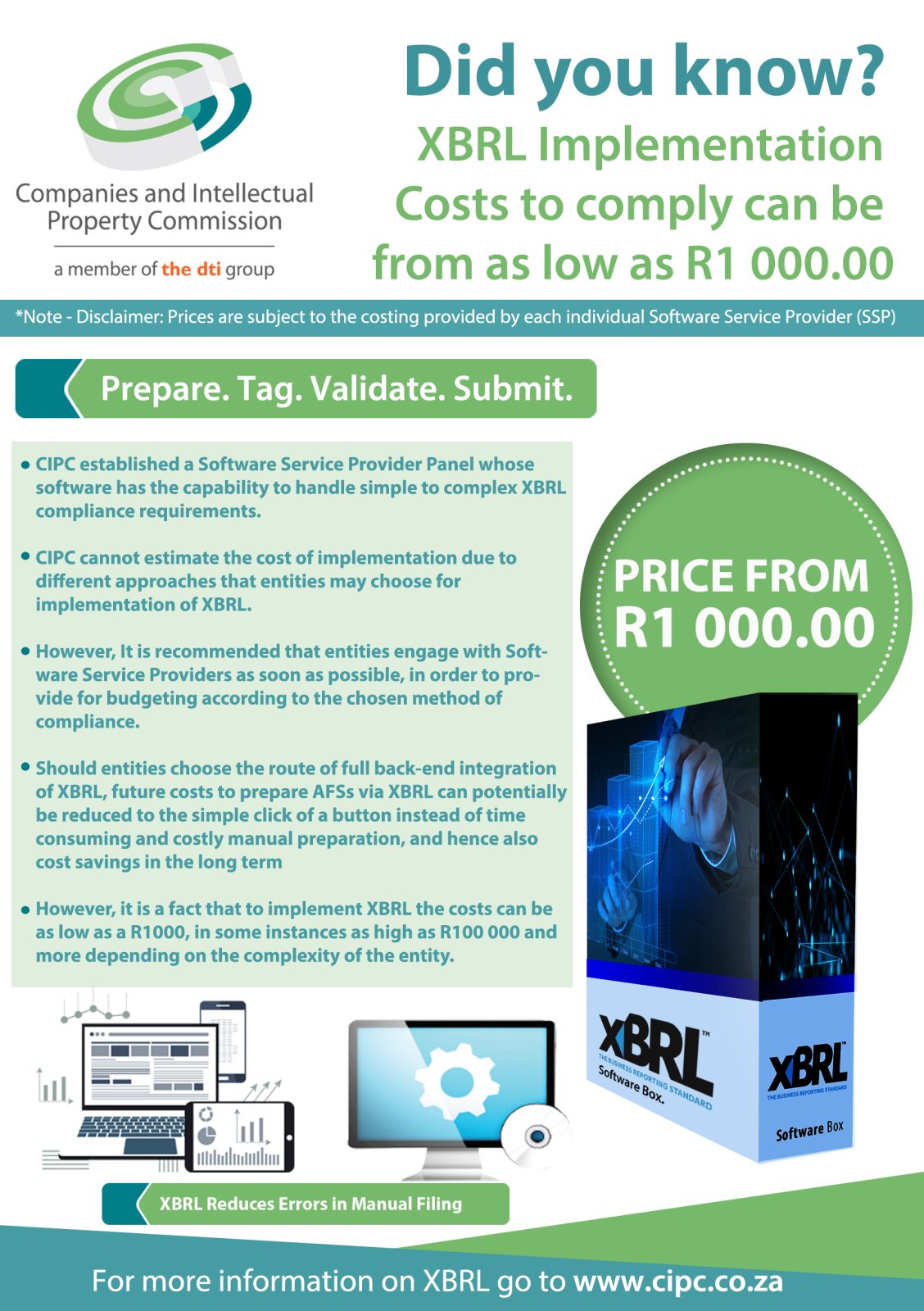
Since its inception in May 2011, the Companies and Intellectual Property Commission (CIPC) has been undergoing a sustained and rapid transformation in order to improve its service delivery and to contribute meaningfully to South Africa's developmental and economic needs. CIPC has come a long way from being an administrative organisation with little or no regulatory focus; an almost exclusively manual, paper-based process, resulting in capturing errors and lost documents; and plagued by outdated and unrealiable ICT infrastructure and ICT governance. Great strides have been made with the mordernisation of the organisation through the upgrading of its ICT infrastructure and the introduction of new and improved online services for company registration, name reservations, annual returns, director and member changes, financial year-end changes, address changes, and trademark, patent, design and copyright in film applications. CIPC plans to digitise all its business processes to ensure ease, speed of transacting and availability anywhere in the world, 24/7. Self-service terminals (SSTs) were introduced in Pretoria, Johannesburg and Cape Town, offering an opportunity for service delivery as they provide automated services that are linked to biometric verification of transacting parties. In 2014, an office providing a dedicated service to listed companies was established. CIPC has continued collaboration efforts with major banks such as FNB, ABSA and STD bank, key partners such as SARS, TRANSNET and DHA, to provide more integrated services and an increase in the choice of channels for improving the ease of doing business. CIPC is also honoured to host a One-Stop-Investment Centre for foreign nationals as a collaboration partner of InvestSA.

The mission of the Companies Tribunal is to adjudicate applications made in terms of Section 195 of the Companies Act (2008) and make orders in respect of such applications, and to facilitate the resolution of companies disputes through conciliation, mediation and arbitration. The Tribunal's mandate is to: adjudicate in relation to any application that may be made to it in terms of the Act and make any order provided for in the Act in respect of any such application; assist in the resolution of disputes; and perform any other function assigned to it by or in terms of the Act.

The mission of the Compensation Fund is to provide efficient, quality, client-centric and accessible Compensation for Occupational Injuries and Diseases (COID) services; sustain financial viability; and be an organisation that takes care of the needs of its staff to ensure effective service delivery. The Fund's strategic objectives are to provide effective and efficient client-orientated support services; and faster, reliable and accessible COID services by 2020.

The Competition Commission is empowered by the Competition Act to investigate, control and evaluate restrictive business practices, abuse of dominant positions and mergers in order to achieve equity and efficiency in the South African economy. Its purpose is to promote and maintain competition in South Africa in order to: promote the efficiency, adaptability and development of the economy; provide consumers with competitive prices and product choices; promote employment and advance the social and economic welfare of South Africans; expand opportunities for South African participation in world markets and recognise the role of foreign competition in the country; ensure that small- and medium-sized enterprises have an equitable opportunity to participate in the economy; and promote a greater spread of ownership, in particular to increase the ownership stakes of historically disadvantaged persons. To achieve its purpose, the Commission's core functions are the following: implement measures to increase market transparency; implement measures to develop public awareness of the provisions of the Act; investigate and evaluate alleged anti-competitive conduct; conduct formal inquiry in respect of the general state of competition in a market; grant or refuse applications for exemption from the application of the Act; authorise, with or without conditions, prohibit or refer mergers of which it receives notice; negotiate and conclude consent orders; refer matters to the Competition Tribunal of South Africa (the Tribunal) and appear before the Tribunal when required; negotiate agreements with any regulatory authority to coordinate and harmonise the exercise of jurisdiction over competition matters within the relevant industry or sector, and ensure the consistent application of the principles of the Act; participate in the proceedings of any regulatory authority; advise and receive advice from any regulatory authority; review legislation and public regulations, and report to the Minister concerning any provision that permits uncompetitive behaviour; and deal with any other matter referred to it by the Tribunal.

The Competition Tribunal adjudicates competition matters, in accordance with the Act, and has jurisdiction throughout South Africa. It is independent and subject to the Constitution and the law. It must be impartial and perform its functions without fear, favour or prejudice. When a matter is referred to it in terms of the Act, the tribunal must: adjudicate complaints of prohibited conduct (restrictive practice and abuse of dominance); impose a remedy; award costs; grant an order for interim relief; authorise or prohibit a large merger; and adjudicate appeals from the Commission's decisions on intermediate mergers and exemptions.

The mission of the Construction Industry Development Board (CIDB) is to drive enhanced delivery management, capacity improvement and contractor development in the construction industry through strategic interventions and partnerships. The Board's mandate is to: establish a national register of contractors and construction projects to systematically regulate, monitor and promote the performance of the industry for sustainable growth, delivery and empowerment; promote improved delivery management capacity and the uniform application of procurement policy throughout all spheres of government; promote improved performance and best practice of public and private sector clients, contractors and other participants in the construction delivery process; promote sustainable participation of the emerging sector; provide strategic direction and develop effective partnerships for growth, reform and improvement of the construction sector.

The objectives underlying the establishment of the Council for Geoscience (CGS) are to develop and publish world-class geoscience knowledge products and to render geoscience-related services to the South African public and industry. The mandate of the CGS includes: the systematic reconnaissance and documentation of the geology of the earth's surface and continental crust, including all offshore areas within the territorial boundaries of South Africa; the compilation of all geoscience data and information, particularly the geological, geophysical, geochemical and engineering-geological data in the form of maps and documents, which are placed in the public domain; basic geoscience research into the nature and origin of rocks, ores, minerals, formations, the history and evolution of life, and the formation of the Earth, with a view to understanding the geological processes of both the past and present, and to compile and publish such research findings nationally and internationally to contribute to the understanding of the Earth, its evolution and its resources; and the collection and curation of all geoscience data and knowledge about South Africa in the National Geoscience Repository. This repository houses a large and growing collection of geoscience information on all the countries of the African continent. This information also includes data that was received from mining companies, universities and research institutions worldwide. Public access to all geoscience information is subject to: existing legislation, arranged through the mandate of the CGS; rendering of geoscience knowledge services and advice to the state to enable informed and scientifically-based decisions about the use of the Earth's surface and the Earth's resources, within the territory of South Africa; and management of a number of national geoscience facilities on behalf of the country. These include the National Seismograph Network, National Borehole-Core Repository, National Geoscience Heritage Collections (Geoscience Museum), and National Geoscience Library. As part of its seismological monitoring function, the CGS contributes to the verification of global compliance to the ban on underground, underwater and upper atmospheric nuclear explosions in terms of the Comprehensive Nuclear-Test-Ban Treaty (CTBT), by making data available from stations located on South African territory; and rendering commercial geoscience services and products to national and international clients. The Council for Geoscience is one of the national science council in the country. It is the custodian of all geoscientific information in South Africa.

The Council for Scientific and Industrial Research (CSIR) is a leading scientific and technology research organisation that researches and develops transformative technologies to accelerate socioeconomic prosperity in South Africa. The organisation's work contributes to industrial development and supports a capable state. The CSIR is an entity of the Department of Science and Innovation. The organisation plays a key role in supporting the public and private sectors through directed research that is aligned with the country's priorities, the organisation's mandate and its science, engineering and technology competences. The nine high-impact sectors identified by the CSIR to achieve its aims are the following industry advancement clusters: Advanced Agriculture and Food; Next Generation Health; Future Production: Chemicals; Future Production: Mining; Future Production: Manufacturing; Defence and Security Industry and society enabling clusters; Smart Places; Smart Mobility; and Next Generation Enterprises and Institutions. Our core values are the driving force behind our ability to conduct cutting-edge research and technological innovation to improve the quality of life of South Africans. These values make for an EPIC team - one that pursues Excellence, celebrates People, personifies Integrity, and welcomes Collaboration.
The mission of the Council for the Built Environment (CBE) is to lead, regulate, advise and coordinate professions and their councils to meet the National Built Environment and Transformation Future of the industry. The CBE's mandate is to: promote and protect the interest of the public in the built environment; promote and maintain a sustainable built environment and natural environment; promote ongoing human resources development in the built environment; facilitate participation by the built environment professions in integrated development in the context of national goals; promote appropriate standards of health, safety and environmental protection within the built environment; promote sound governance of the built environment professions; promote liaison in the field of training in South Africa and elsewhere and to promote the standards of such training in the country; serve as a forum where the built environment professions may discuss the relevant issues (required qualifications; standards of education; training and competence; promotion of professional status; and legislation impacting on the built environment); and ensure uniform application of norms and guidelines set by the councils for the professions throughout the built environment.
No map locations
These listings don't have coordinates yet.
Can't find the business?
Adding a business to Insly is always free.
Get free quotes from Public Services & Government in Pretoria
Tell us what you need and get quotes from businesses that respond fast.
Related searches in Pretoria
Trending searches in Pretoria
- Doctors in Pretoria
- Opera & Ballet in Pretoria
- Commercial Truck Repair in Pretoria
- Auto Glass Services in Pretoria
- Lawyers in Pretoria
- Empanadas in Pretoria
- Donuts in Pretoria
- Behavior Analysts in Pretoria
- Baby Gear & Furniture in Pretoria
- Flooring in Pretoria
- Banks & Credit Unions in Pretoria
- Ayurveda in Pretoria
- Dentists in Pretoria
- Hypnosis/Hypnotherapy in Pretoria
- Food Delivery Services in Pretoria
- Planetarium in Pretoria
- Fire Protection Services in Pretoria
- Accountants in Pretoria
- Staffing Solutions in Pretoria
- Music Venues in Pretoria
- Beer, Wine & Spirits in Pretoria
More nearby
- Grout Services in Pretoria
- Body Contouring in Pretoria
- Acne Treatment in Pretoria
- Venues & Event Spaces in Pretoria
- Hospitals in Pretoria
- Fireplace Services in Pretoria
- Child Care & Day Care in Pretoria
- Pizza in Pretoria
- Day Spas in Pretoria
- Fashion in Pretoria
- Catering Equipment in Pretoria
- Doulas in Pretoria
Public Services & Government in nearby cities
Related guides
- Best Restaurants in Pretoria: A Local Guide to Dining in the Jacaranda City
- Cheap Eats & Affordable Restaurants in Pretoria: A Budget Foodie Guide
- Best Restaurants for Special Occasions & Date Nights in Pretoria
- Best Family-Friendly Restaurants in Pretoria: A Local Guide
- Pre-Hire Checklist for Hiring a Plumber in Pretoria
- Common Plumber Services in Pretoria: A Comparison Guide
Frequently asked questions
What did people search for similar to public services & government in Pretoria?
People also searched for these in Pretoria:
- State-owned Enterprises(SoEs)
- Associations
- National Departments