
State-owned Enterprises(SoEs)
116 results
Get quotes from multiple providers
Describe your job once and compare quotes from State-owned Enterprises(SoEs) providers — no payment now.

The mission of the Development Bank of Southern Africa (DBSA) is to advance the development impact in the region by expanding access to development finance, and effectively integrating and implementing sustainable development solutions. The DBSA's purpose is to accelerate sustainable socio-economic development, and improve the quality of life of the people of the Southern African Development Community (SADC) and, more recently, the whole of the African continent, by driving financial and non-financial investments in the social and economic infrastructure sectors: social infrastructure - infrastructure aimed at addressing backlogs and expediting the delivery of essential social services to support sustainable living conditions and a better quality of life within communities; and economic infrastructure - infrastructure aimed at addressing capacity constraints and bottlenecks in order to optimise economic growth potential and support regional integration. The DBSA has prioritised water, energy, transport and ICT as its key focus areas.

The vision of the Education Labour Relations Council (ELRC) is to improve the quality of teaching and learning through labour peace. The ELRC is a bargaining council that serves the public education sector nationally and provincially. The primary business of the ELRC is to promote the maintenance of labour peace in the public education sector, through the provision of dispute resolution and prevention services. The secondary business of the ELRC is to promote the maintenance of labour peace in the public education sector through the facilitation of negotiations between trade unions and the state as the employer. The Council's strategic outcome-orientated goals are to: provide an evidence base for improved policies and policy implementation in basic education through research and monitoring, and evaluation activities; attach equal importance to proactive dispute prevention and dispute resolution; maximise the scope of parties' shared interest through collective bargaining processes; provide appropriate support and training for all involved in dispute resolution and collective bargaining; and support and complement the core activities of the Council through sound communication strategies, special initiatives and campaigns.
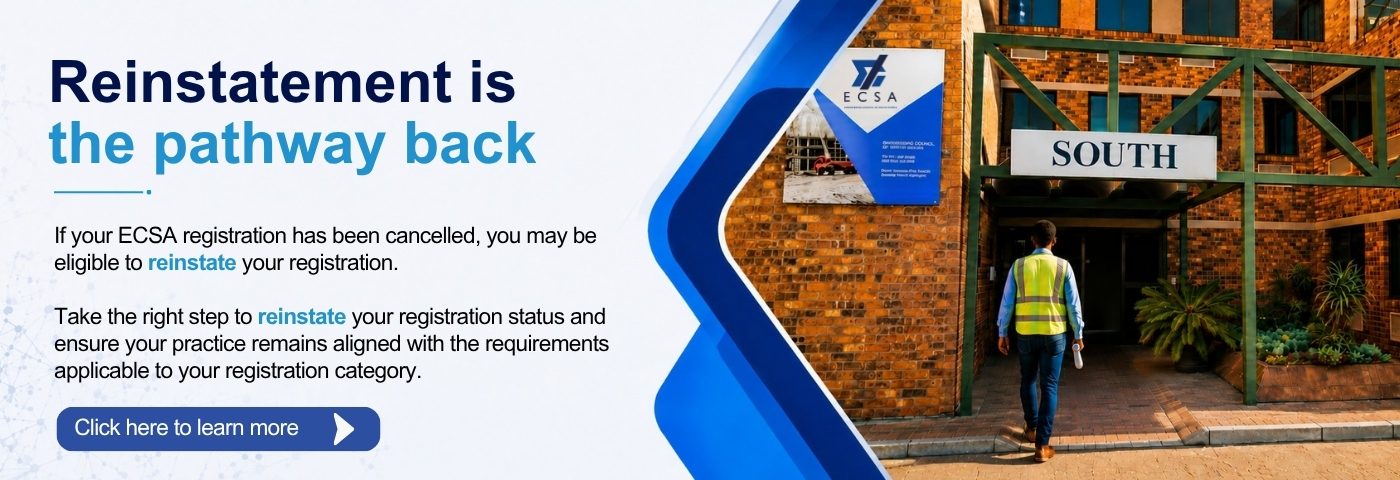
The Engineering Council of South Africa (ECSA) is a statutory body established in terms of the Engineering Profession Act (EPA), 46 of 2000. The ECSA's primary role is the regulation of the engineering profession in terms of this Act. Its core functions are: the accreditation of engineering programmes; registration of persons as professionals in specified categories; and the regulation of the practice of registered persons. ECSA is the only body in South Africa that is authorised to register engineering professionals and bestow the use of engineering titles such as Pr Eng, Pr Tech Eng, Pr Techni Eng, Pr Cert Eng, on persons who have met the requisite professional registration criteria. Its vision is to ensure engineering excellence and to transform the nation and fulfils this vision though: determining standards for education and accreditation of educational programmes; registration of engineering practitioners; developing and sustaining a relevant, transformed, competent and internationally recognised engineering profession; educating the public on expected engineering quality standards; protecting the interest of the public against sub-standard quality of engineering work; regulatory efforts to ensure environmental protection; and engaging with government to support national priorities.

Eskom Holdings SOC Ltd is South Africa's primary electricity supplier, generating approximately 90% of the electricity used in South Africa. Eskom's strategic role remains to enable economic growth by providing a reliable and predictable electricity supply in an efficient and sustainable manner. It also contributes to job creation, skills development, transformation and broad-based black economic empowerment, in support of the National Development Plan (NDP) and other country initiatives.
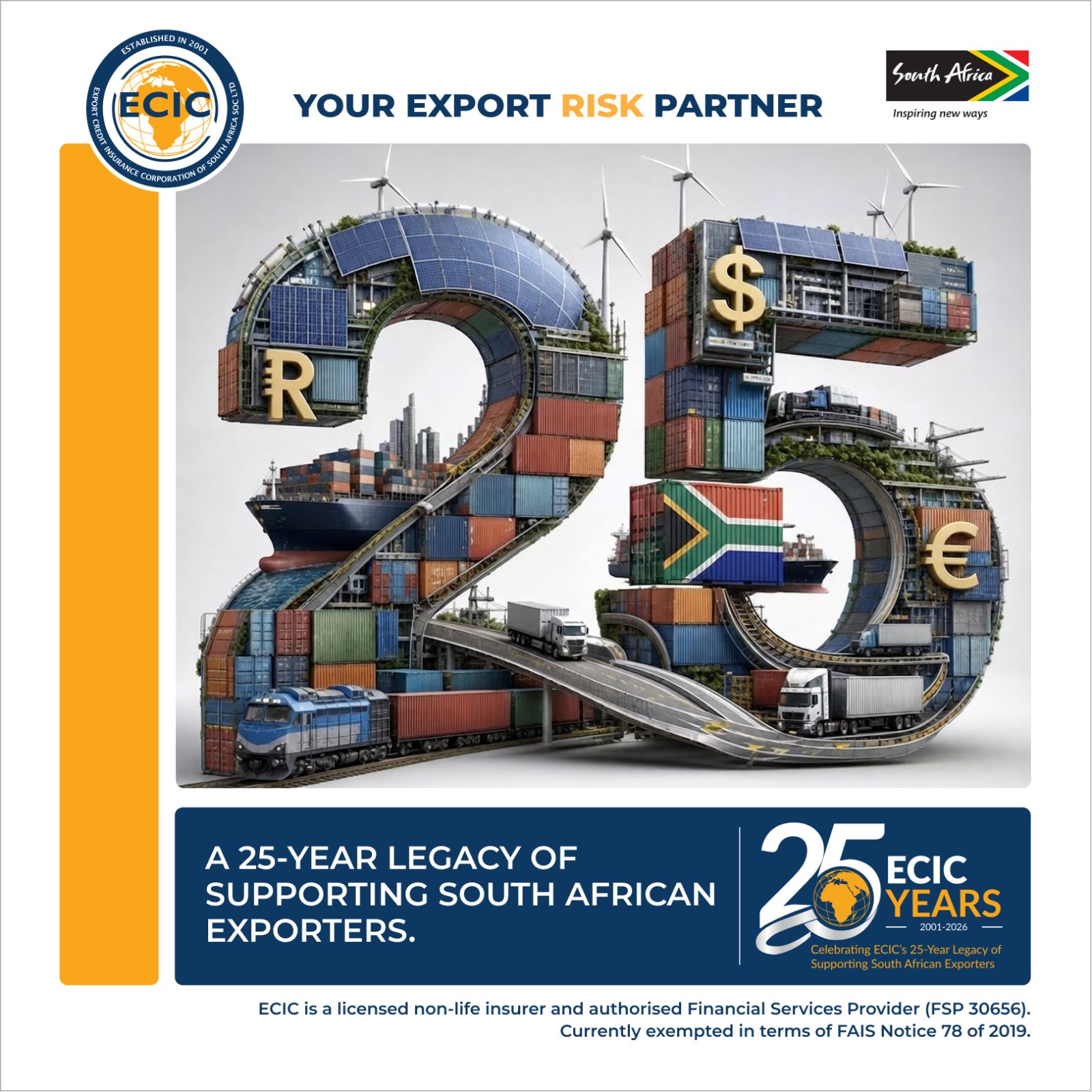
ECIC is a PFMA schedule 3B entity and is subject to the supervision and regulation by the Prudential Authority and Financial Services Conduct Authority in terms of the Insurance Act, 2017. The mission of the Export Credit Insurance Corporation of South Africa SOC Ltd (ECIC) is to provide insurance solutions in support of South African goods and services by applying best practice underwriting and risk management principles. To support this mandate, the ECIC evaluates export credit and foreign investment risks and provides export credit and foreign investment insurance cover on behalf of the government; and underwrites loans, including equity investments for the export of goods and services from South Africa. The ECIC extends its services as far as it can, consistent with preserving the financial viability essential to its long-term support of goods and services; and provides sound and efficient financial services that contribute to public confidence and comply with international standards. Since its inception the mandate of ECIC has been the facilitation of export trade and cross-border investments. Historically, ECIC has been supporting capital goods exports and services. In 2021, the ECIC mandate was expanded beyond capital goods exports. The authorisation to support non-capital goods exports lays the basis for ECIC to insure consumer goods and short-term export transactions with a tenor of less than two years. On 15 May 2024, the ECIC mandate was extended to cover Euro-denominated transactions. This presents new opportunities in new markets addressing the request from both exporters and SA banks.

The mission of the Film and Publication Board (FPB) is to ensure efficient and effective consumer protection through regulation of films, games and certain publications, while empowering the public, especially children, through robust information sharing. The Board regulates the media environment through the classification of content by: maintaining relevance to the values and norms of South African society through scientific research; balancing the right to freedom of expression with an obligation to protect children from exposure to potentially disturbing, harmful and inappropriate materials; and protecting children from sexual exploitation in media content, in order to educate the broader South African society to make informed choices.
The Financial Intelligence Centre (FIC) is South Africa's national centre for the gathering, analysis and dissemination of financial intelligence. The FIC was established to identify proceeds of crime, combat money laundering, and the financing of terrorism and, in so doing, has a primary role to protect the integrity of South Africa's financial system. The Entity was established by the FIC Act 38 of 2001 and reports to the Minister of Finance and to Parliament. The FIC's mandate is to: identify the proceeds of crime, combat money laundering, and terror financing; supervise and enforce compliance with the FIC Act; share information with law enforcement authorities, supervisory bodies, intelligence services, the South African Revenue Service, and other local and international agencies; facilitate effective supervision and enforcement by supervisory bodies; formulate and lead the implementation of policy regarding money laundering and the financing of terrorism; provide policy advice to the Minister of Finance; and uphold the international obligations and commitments required by the country in respect of anti-money laundering and combating financing of terrorism (AML/CFT). The FIC Act introduces a regulatory framework of measures that requires certain categories of business to take steps regarding client identification, record-keeping, reporting of information and internal compliance structures. All businesses have to report various suspicious transactions to the FIC. It also receives additional financial data from accountable and reporting institutions. The Entity uses this financial data and available data to develop financial intelligence. It is able to make this intelligence available to law enforcement, police, and tax authorities for follow-up investigations. On 1 December 2010, amendments to the FIC were promulgated, which required that all accountable and reporting institutions register with the FIC. Furthermore, the Act gave the Entity and supervisory bodies the authority to inspect and impose administrative penalties on non-compliant businesses. The Act also introduced an appeals process and an appeal board. South Africa is a member of the Financial Action Task Force, the international body which sets standards and policy on anti-money laundering and for combating the financing of terrorism (AML/CFT). The FIC currently leads the South African delegation of various government departments to the Eastern and Southern Africa Anti-Money Laundering Group, which aims to support countries to implement the global AML/CFT standards. The FIC is a member and current chair of the Egmont Group, which is made up of financial intelligence units from 147 countries around the world. The primary aim of the organisation is to facilitate cooperation and sharing of financial intelligence information among its members.

The Financial Sector Conduct Authority (FSCA) was established by the Financial Sector Regulation Act 9 of 2017 (the FSR Act) to become a dedicated market conduct authority replacing the Financial Services Board (FSB), on 1 April 2018. The FSCA's mandate is to: enhance the efficiency and integrity of financial markets; promote fair customer treatment by financial institutions; provide financial education and promote financial literacy; and assist in maintaining financial stability. The FSR Act extends the jurisdiction of the FSCA to include oversight of financial products and services not overseen by the FSB banking; services related to credit; and the buying and selling of foreign exchange. It also dictates a shift in approach from the FSB's traditional compliance driven model to one that is proactive, pre-emptive, risk-based and outcomes focused. Crucially, the FSR Act includes financial inclusion and transformation of the financial sector in its overall objectives. The FSCA's six priority strategic focus areas for the next three years are: building a new organisation; an inclusive and transformed financial sector; a robust regulatory framework that promotes fair customer treatment; informed financial customers; strengthening the efficiency and integrity of our financial markets; and understanding new ways of doing business and disruptive technologies.

The beginning of the Government Employees Medical Scheme (GEMS) was a historic moment when, in 2002, the Cabinet approved a framework policy on a restricted (closed) medical scheme for further development by an interdepartmental working group (Departments of Public Service and Administration, National Treasury, Health, Education, Correctional Services and SAPS). The approved framework policy centred on the principles of equity, efficiency and differentiation: equity, where employees have equal access to the most extensive set of equal basic benefits under equitable remuneration structures, subject to affordability; efficiency, regarding the costs and delivery of benefits; differentiation, where employees choosing more extensive cover have equal access to higher benefits subject to their needs; and government's commitment to an equitable and affordable medical scheme. The Cabinet gave the development and implementation of GEMS intense consideration, relying on substantial research and data analyses. The implementation of GEMS is a positive step that positions government as an employer of choice that truly cares for the health and wellbeing of its employees. GEMS was registered on 1 January 2005 specifically to meet the healthcare needs of government employees. It offers six excellent healthcare benefit options, namely Tanzanite One, Beryl, Ruby, Emerald Value, Emerald and Onyx. Its goal is to help public service employees and their families to get the best possible healthcare at the most affordable rate.

The Government Employees Pension Fund (GEPF) is a Defined Benefit pension fund that was established in May 1996, when various public sector funds were consolidated. The Fund's core business is to oversee pensions and other benefits for government employees in South Africa. The GEPF appoints the Government Pensions Administration Agency (GPAA) to administer benefits on behalf of the Fund and the Public Investment Corporation SOC Limited (PIC) as asset manager to invest on behalf of the Fund.

The mission of the Housing Development Agency (HDA) is to build partnerships to create integrated sustainable human settlements. The functions of the Agency are to: develop a development plan to be approved by the Minister in consultation with the relevant authorities in the provinces and municipalities; develop strategic plans with regard to the identification and acquisition of state, privately and communally owned land that is suitable for residential and community development; prepare necessary documentation for consideration and approval by the relevant authorities as may be required in terms of any other applicable law; monitor progress of the development of land and landed property acquired for the purposes of creating sustainable human settlements; enhance the capacity of organs of state, including skills transfer to enable them to meet the demand for housing delivery; ensure that there is collaboration and intergovernmental and integrated alignment for housing development services; identify, acquire, hold, develop and release state, private and communal land for residential and community development; undertake such project management services as may be necessary, including assistance relating to approvals required for housing development; contract with any organ of state for the purpose of acquiring available land for residential housing and community development for the creation of sustainable human settlement; assist organs of state in dealing with housing developments that have not been completed within the anticipated project period; assist organs of state with the upgrading of informal settlements; and assist organs of state in respect of emergency housing solutions.

Serving South Africa for more than 50 years, the Human Sciences Research Council (HSRC) is the largest research institute in Africa focusing on the social sciences and humanities. It produces and disseminates knowledge that contributes to policies and programmes to alleviate poverty, reduce inequality, and stimulate innovations for employment creation. More than knowledge production, the HSRC works towards the uptake of research for policy and impact. Collaborations and partnerships are critical and include local, regional and international public, private and community entities.

The mission of the Independent Development Trust (IDT) is to manage and deliver integrated social infrastructure programmes on behalf of government on time, cost-effectively and through a people-centred approach. The IDT is a schedule 2 state-owned entity that manages the implementation and delivery of critically needed social infrastructure and social development programmes on behalf of the South African government. The IDT reports to the Minister of Public Works and Infrastructure, who is the executive authority and the shareholder representative. The IDT's national office is located in Pretoria, and has provincial offices in the country's nine provinces. The IDT was established in 1990 and was allocated a grant of R2 billion by government to support education, housing, health services and business development projects in previously disadvantaged and mainly rural areas. After 1999, the IDT was reconfigured and listed as a schedule 2 programme implementation agency as prescribed by the Public Finance Management Act (PFMA) 1 of 1999. From 1999 to date, the organisation has delivered approximately R27,4 billion worth of social infrastructure and social development programmes across the country.

The Industrial Development Corporation of South Africa Limited (IDC) was established in 1940 by Parliament's Industrial Development Corporation Act No 22 of 1940. The corporation was established to spearhead the development of domestic industrial capacity, especially in view of the shortage of manufactured goods experienced as a result of the disruption of trade between Europe and South Africa during the Second World War. Since its establishment, the corporation has been instrumental in implementing South Africa's industrial development policy, establishing some of the industries that have since become cornerstones of the country's manufacturing sector. These include the petrol-chemicals, mining and mineral beneficiation industries, fabricated metals, agro-industries, and clothing and textiles among others. Although our priorities and focus areas have evolved over the years in line with the policy direction of our shareholder (Government), the IDC remains committed to its objectives of developing South Africa and the continent's industrial capacity and, in doing so, playing a major role in facilitating job creation. By strengthening industrial capacity, the corporation achieves specific outcomes, the most important of which is to facilitate the creation of employment opportunities through companies we fund. The IDC remains committed to promoting sustainable growth and increasing sectoral diversity, thereby boosting local production of goods. In addition to job creation, IDC funding helps to promote regional development as well as economic integration including advancing Black Economic Empowerment initiatives. Furthermore, our role in the rest of Africa remains to proactively develop and implement strategies that create linkages and integrate value chains across the continent. Through our subsidiary sefa, the Corporation has played a critical role in promoting entrepreneurial development by supporting Small Medium Enterprises (SMES).

The mission of the Ingonyama Trust Board is to contribute to the improvement of the quality of life of the members of the traditional communities living on Ingonyama Trust land by ensuring that land management is to their benefit and in accordance with the laws of the land, and to develop progressive business models for the social and economic upliftment and the empowerment of the members of traditional communities on land administered by the Trust. The Board's strategic objectives are: unlocking an enabling environment conducive to development on Trust land; effective and efficient asset management services; and support to Traditional Councils in capacity building programmes.
No map locations
These listings don't have coordinates yet.