
Johannesburg
20650 businesses

Brand South Africa is the country's official marketing agency appointed to promote the nation's brand reputation. The primary objective of Brand South Africa is to develop and implement proactive marketing and communication strategies for South Africa, with and through stakeholders, to promote South Africa's competitiveness and attractiveness to both domestic and international audiences. Its role is to create a positive, unified image of South Africa; one that builds pride, promotes investment and tourism, and helps new enterprises and job creation.

The University of the Witwatersrand (Wits University), commonly known as Wits, is a public research university located in Johannesburg, South Africa. It is renowned for its academic and research excellence, with a strong commitment to social justice and public good. Wits is structured into five faculties, comprising 34 schools, and has a large student population, exceeding 41,000.

Department of Higher Education and Training (DHET)

Department of Higher Education and Training (DHET)
The Engineering Council of South Africa (ECSA) is a statutory body established in terms of the Engineering Profession Act (EPA), 46 of 2000. The ECSA's primary role is the regulation of the engineering profession in terms of this Act. Its core functions are: the accreditation of engineering programmes; registration of persons as professionals in specified categories; and the regulation of the practice of registered persons. ECSA is the only body in South Africa that is authorised to register engineering professionals and bestow the use of engineering titles such as Pr Eng, Pr Tech Eng, Pr Techni Eng, Pr Cert Eng, on persons who have met the requisite professional registration criteria. Its vision is to ensure engineering excellence and to transform the nation and fulfils this vision though: determining standards for education and accreditation of educational programmes; registration of engineering practitioners; developing and sustaining a relevant, transformed, competent and internationally recognised engineering profession; educating the public on expected engineering quality standards; protecting the interest of the public against sub-standard quality of engineering work; regulatory efforts to ensure environmental protection; and engaging with government to support national priorities.

Eskom Holdings SOC Ltd is South Africa's primary electricity supplier, generating approximately 90% of the electricity used in South Africa. Eskom's strategic role remains to enable economic growth by providing a reliable and predictable electricity supply in an efficient and sustainable manner. It also contributes to job creation, skills development, transformation and broad-based black economic empowerment, in support of the National Development Plan (NDP) and other country initiatives.
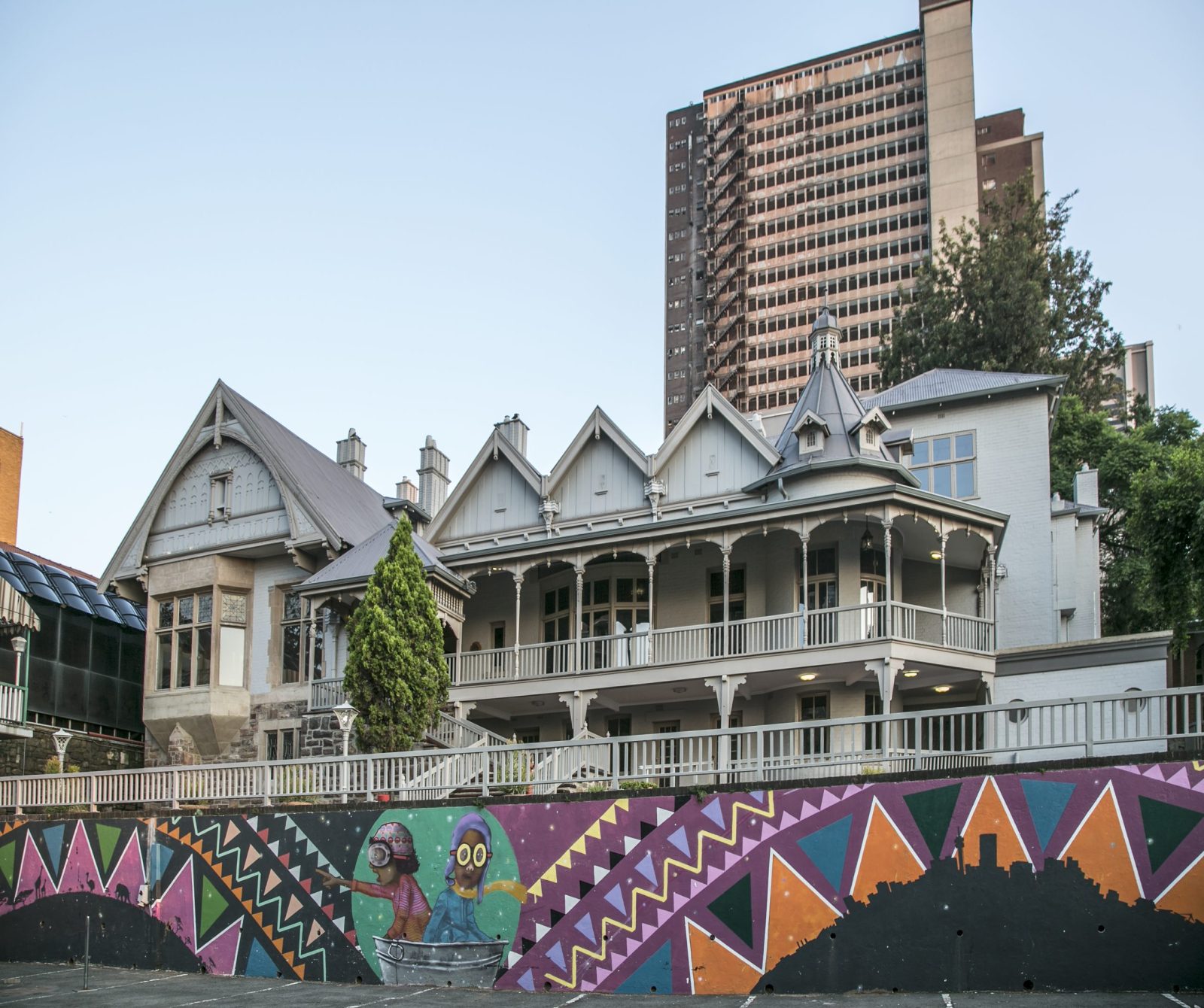
The Market Theatre Foundation was established in 1976 as a non-profit company and was declared a Cultural Institution in 2005. The Market Theatre Foundation includes the Market Theatre, the Market Photo Workshop, the Market Theatre Laboratory and the Windybrow Arts Centre.

The mission of the Gauteng Department of Agriculture and Rural Development is to radically modernise and transform agri-food value chain, ensure sustainable environment and development of urban and rural communities by ensuring sustainable environment management; providing access to and inclusive participation in commercial agri-food value chain and agro-processing; promoting food security; promoting/contributing/stimulating integrated rural and urban development; and promoting the One Health System.

The mission of the Gauteng Department of Co-operative Governance and Traditional Affairs is to coordinate the effective functioning of local government, promote integrated development planning, and deepen participatory democracy in order to accelerate service delivery. The Department has adopted a set of values that are informed by the Batho Pele (People First) principles of the South African public service, and as an organisation its specific focus is on respect, integrity, responsibility, accountability and fairness.

The key role of the Gauteng Department of e-Government is the roll-out of a network infrastructure that will connect government facilities, including schools, hospitals, offices and economic zones. It endevours to: create an enabling platform and support service; enable GCR entities to deliver e-Government Services; establish a GCR e-Government governance structure to drive priorities, policies, standards and regulations; promote the usage of e-Government services; stimulate the ICT economy through facilitating incubation and innovation; and encourage public and private partnerships for the development and roll-out of e-Government services.

The aim of the Gauteng Department of Economic Development is to lead, facilitate and manage sustainable job creation and inclusive economic growth and development in the Gauteng city region. The Department's mission is to be an activist, interventionist and developmentally-focused department contributing to an inclusive and growing economy in Gauteng by providing thought leadership to inform the economic development agenda; mobilising stakeholders to partner with for economic growth and development; creating an enabling regulatory environment and stimulating business practices that promote inclusive economic growth; enhancing the competitive advantage of key sectors of the economy; promoting and attracting trade and investment to the economy; directing investment into strategic economic infrastructure; and proactively linking communities to economic opportunities. The Department's strategic goals are to provide integrated economic and development planning; facilitate the implementation of strategic programmes that will stimulate the brand, competitiveness and social transformation of Gauteng, enhance trade and export promotion, and attract investment; promote an efficient, equitable and socially responsible business environment; act as an economic intelligence nerve centre to inform strategic decision-making and targeted sector development strategies; and promote public accountability and achieve high standards of corporate governance and efficient resource utilisation.

The vision of the Gauteng Department of Education is to ensure that all learners in Gauteng do well at school and leave their institutions with the values, knowledge, skills and qualifications that will give them the best chance of success in their adult lives. The Department's mission is to ensure that quality learning and teaching takes place in the classroom every day. Its strategic goals are to ensure that Gauteng has effective schools and learning institutions; provide relevant, coordinated and effective support; enable young people to make the transition from school to further education and/or work that provides further training opportunities; and strengthen partnerships with all stakeholders, resulting in education becoming a priority in society.

The mission of the Gauteng Department of Health is to provide excellent, integrated health services in partnership with stakeholders and contribute towards the reduction of poverty, vulnerability and the burden of disease in all communities in Gauteng. The core mandate of the Department is to improve the health status of the population, improve health services, secure better value for money, ensure effective organisation, and provide integrated services and programmes that promote and protect healthy, quality and sustainable livelihoods for poor, vulnerable and marginalised groups in society. The Department's strategic goals are improved health and well-being, with an emphasis on vulnerable groups; reduction in the rate of new HIV infections by 50% in youth, adults and babies, and reduction in the number of deaths from TB and AIDS by 20%; increased efficiency of service implementation; human capital management and development for better health outcomes; and organisational excellence.

The mission of the Housing Development Agency (HDA) is to build partnerships to create integrated sustainable human settlements. The functions of the Agency are to: develop a development plan to be approved by the Minister in consultation with the relevant authorities in the provinces and municipalities; develop strategic plans with regard to the identification and acquisition of state, privately and communally owned land that is suitable for residential and community development; prepare necessary documentation for consideration and approval by the relevant authorities as may be required in terms of any other applicable law; monitor progress of the development of land and landed property acquired for the purposes of creating sustainable human settlements; enhance the capacity of organs of state, including skills transfer to enable them to meet the demand for housing delivery; ensure that there is collaboration and intergovernmental and integrated alignment for housing development services; identify, acquire, hold, develop and release state, private and communal land for residential and community development; undertake such project management services as may be necessary, including assistance relating to approvals required for housing development; contract with any organ of state for the purpose of acquiring available land for residential housing and community development for the creation of sustainable human settlement; assist organs of state in dealing with housing developments that have not been completed within the anticipated project period; assist organs of state with the upgrading of informal settlements; and assist organs of state in respect of emergency housing solutions.

The vision of the Gauteng Department of Roads and Transport is a modern, integrated, efficient and sustainable transport and road infrastructure system in Gauteng. Its mission is to facilitate and provide an integrated transport system that is reliable, accessible, safe and affordable; offers seamless mobility; is environmentally sustainable; and supports industrialisation and radical socio-economic transformation. The Department's strategic goals are a: modern integrated public transport system that provides customer-centric transport services; strategic economic transport infrastructure that stimulates socio-economic growth; and modern, accountable and development-oriented department.
Map View
15 locations