
Pretoria
10566 businesses

The National Treasury is responsible for managing South Africa's national government finances. Supporting efficient and sustainable public financial management is fundamental to the promotion of economic development, good governance, social progress and a rising standard of living for all South Africans. The Constitution of the Republic (Chapter 13) mandates the National Treasury to ensure transparency, accountability and sound financial controls in the management of public finances. The National Treasury's legislative mandate is also described in the Public Finance Management Act (Chapter 2). The National Treasury is mandated to promote government's fiscal policy framework; to coordinate macroeconomic policy and intergovernmental financial relations; to manage the budget preparation process; to facilitate the Division of Revenue Act, which provides for an equitable distribution of nationally raised revenue between national, provincial and local government; and to monitor the implementation of provincial budgets. As mandated by the executive and Parliament, the National Treasury will continue to support the optimal allocation and utilisation of financial resources in all spheres of government to reduce poverty and vulnerability among South Africa's most marginalised.

The National School of Government (NSG) has a constitutional and legislative mandate to provide Education, Training and Development (ETD) in the three spheres of government, state-owned entities (SOEs) and organs of state. This mandate is in line with Section 195 of the Constitution of the Republic of South Africa, 1996, which declares public administration to be development-oriented and participatory, and the basic values and principles being the basis of interaction between public administration (three spheres of government, organs of state, public enterprises) and society. This is achieved through integrated and collaborative network of training institutions and practitioners, including independent individual contractors, onboard trainers, higher education institutions and private entities, providing the public service with affordable access to quality training opportunities. The NSG also has collaborated with different international partners on board that assist with delivery of programmes at an international level. In terms of current legislative arrangements, government departments must annually budget one per cent of the employee compensation budget for training of its employees. The responsibility for training employees is vested with departmental accounting officers (Public Service Act) and is undertaken primarily through competitive procurement processes. The NSG is required to generate revenue towards ensuring its financial viability and sustainability and, as such the NSG is placed on a competitive and cost-recovery footing, together with internal and external training providers. The cost recovery model is made up of partial funding appropriated by Parliament and income derived from cost recovery through training course fees, which is managed in the Training Trading Account (TTA). The cost recovery model requires that all costs associated with the design and development of learning material and implementation of training courses from the training fees are recovered. The ETD interventions are delivered to public representatives and public servants and are clustered in accordance with the following occupational bands: I. Cadet and Foundational Management: Providing ETD interventions to graduates who wish to join the public service, public service interns and public servants up to occupational level 8 (support staff, administrators and supervisors. II. Middle Management Development: Providing ETD interventions for junior and middle managers with emphasis on occupational skills (know how), supply chain management, budgeting, supervisory skills and pathways to (further) qualifications. III. Senior Management Development and Professionalisation: Providing ETD interventions to senior managers. These include analytical skills, problem solving as well managing money and people. This is in addition to the core competencies (expertise) required to perform as a professional public servant.

The National School of Government (NSG) has a constitutional and legislative mandate to provide Education, Training and Development (ETD) in the three spheres of government, state-owned entities (SOEs) and organs of state. This mandate is in line with Section 195 of the Constitution of the Republic of South Africa, 1996, which declares public administration to be development-oriented and participatory, and the basic values and principles being the basis of interaction between public administration (three spheres of government, organs of state, public enterprises) and society. This is achieved through integrated and collaborative network of training institutions and practitioners, including independent individual contractors, onboard trainers, higher education institutions and private entities, providing the public service with affordable access to quality training opportunities. The NSG also has collaborated with different international partners on board that assist with delivery of programmes at an international level. In terms of current legislative arrangements, government departments must annually budget one per cent of the employee compensation budget for training of its employees. The responsibility for training employees is vested with departmental accounting officers (Public Service Act) and is undertaken primarily through competitive procurement processes. The NSG is required to generate revenue towards ensuring its financial viability and sustainability and, as such the NSG is placed on a competitive and cost-recovery footing, together with internal and external training providers. The cost recovery model is made up of partial funding appropriated by Parliament and income derived from cost recovery through training course fees, which is managed in the Training Trading Account (TTA). The cost recovery model requires that all costs associated with the design and development of learning material and implementation of training courses from the training fees are recovered. The ETD interventions are delivered to public representatives and public servants and are clustered in accordance with the following occupational bands: I. Cadet and Foundational Management: Providing ETD interventions to graduates who wish to join the public service, public service interns and public servants up to occupational level 8 (support staff, administrators and supervisors. II. Middle Management Development: Providing ETD interventions for junior and middle managers with emphasis on occupational skills (know how), supply chain management, budgeting, supervisory skills and pathways to (further) qualifications. III. Senior Management Development and Professionalisation: Providing ETD interventions to senior managers. These include analytical skills, problem solving as well managing money and people. This is in addition to the core competencies (expertise) required to perform as a professional public servant.
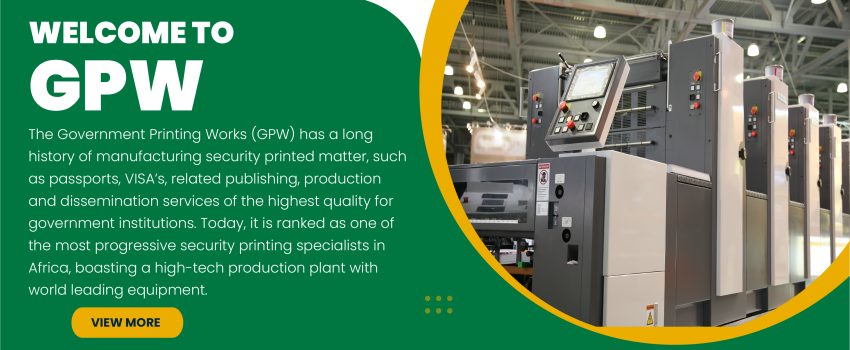
The mission of the Government Printing Works (GPW) is to provide cost-effective, reliable and timeous services to all spheres of government in printing; deliver equitable information to the public; and disseminate government information through technology, innovation and service excellence. Having invested in modern and world-class printing and data management technology, the GPW is fully equipped to meet its customers' printing needs, offering a comprehensive suite of standard printing, security printing and publishing services to the South African government. The GPW also supports the dissemination of government information to the public. As the editor and publisher of Government Gazettes - the official publications used by government to communicate messages of national importance to the general public - the GPW now also provides its customers with convenient electronic access to submit content, read current gazettes and access all back issues. The GPW's wide range of products and services comprises printing services, security printing and consulting services, gazette services, publications, and government stationery services.

The mission of the Government Pensions Administration Agency (GPAA) is to effectively and efficiently administer fund benefits on behalf of its clients and stakeholders. The GPAA ensures effective, transparent, accountable and coherent governance of the pension funds it administers on behalf of the Government Employees Pension Fund (GEPF) and the National Treasury. The Agency's strategic plan is based on the need to achieve the following: enhancement of administrative capacity; modernisation of processes and systems; enhancement of human capital, including people competence and wellness; meeting of service levels as per service level agreements; and managing of the roles and responsibilities of employer departments with regards to the GPAA.

The mission of the Government Communication and Information System (GCIS) is to deliver effective strategic government communication; set and influence adherence to standards and coherence of message and proactively communicate with the public about government policies, plans, programmes and achievements.

The Centre for Public Service Innovation (CPSI) is mandated to develop innovative, sustainable and responsive models for improved service delivery. The work of the CPSI is guided by an understanding of innovation in a public sector context as 'the creation and implementation of new and service delivery solutions (systems, processes, methods, models, products and services) resulting in significant improvements in outcomes, efficiency, effectiveness and quality'. The CPSI facilitates unearthing, development and implementation of innovative ideas within and throughout the public service. It achieves this by facilitating pilot projects aimed at demonstrating the value of innovative solutions, and through activities that create an enabling environment within the public sector to support and sustain innovation. The CPSI's cross-sector reach makes it a resource for the whole of government, thus bridging institutional boundaries. Through active research and knowledge sharing platforms and products, the CPSI identifies and shares lessons and information on innovation trends nationally, across Africa and internationally. The CPSI partners with a range of individuals and institutions in government, business and the community in exciting and mutually beneficial ways. This partnership model allows us to leverage financial and/or intellectual capital in support of government priorities.

The mission of the Department of Transport (DOT) is to lead the development of integrated efficient transport systems by creating a framework of sustainable policies, regulations and implementable models to support government strategies for economic, social and international development. The objectives that the Department aims to achieve by providing policy framework, regulation and implementation models are: competitive transport costs; safety and security improvements; a reduction in infrastructure backlogs; improvement in access; and a reduction of time in transit.

The mission of the Department of Trade, Industry and Competition (the dtic) is to promote structural transformation, towards a dynamic industrial and globally competitive economy; provide a predictable, competitive, equitable and socially responsible environment conducive to investment, trade and enterprise development; broaden participation in the economy to strengthen economic development; and continually improve the skills and capabilities of the dtic to effectively deliver on its mandate and respond to the needs of South Africa's economic citizens. The department's strategic objectives are to facilitate transformation of the economy to promote industrial development, investment, competitiveness and employment creation; build mutually beneficial regional and global relations to advance South Africa's trade, industrial policy and economic development objectives; facilitate broad-based economic participation through targeted interventions to achieve more inclusive growth; create a fair regulatory environment that enables investment, trade and enterprise development in an equitable and socially responsible manner; and promote a professional, ethical, dynamic, competitive and customer-focused working environment that ensures effective and efficient service delivery.
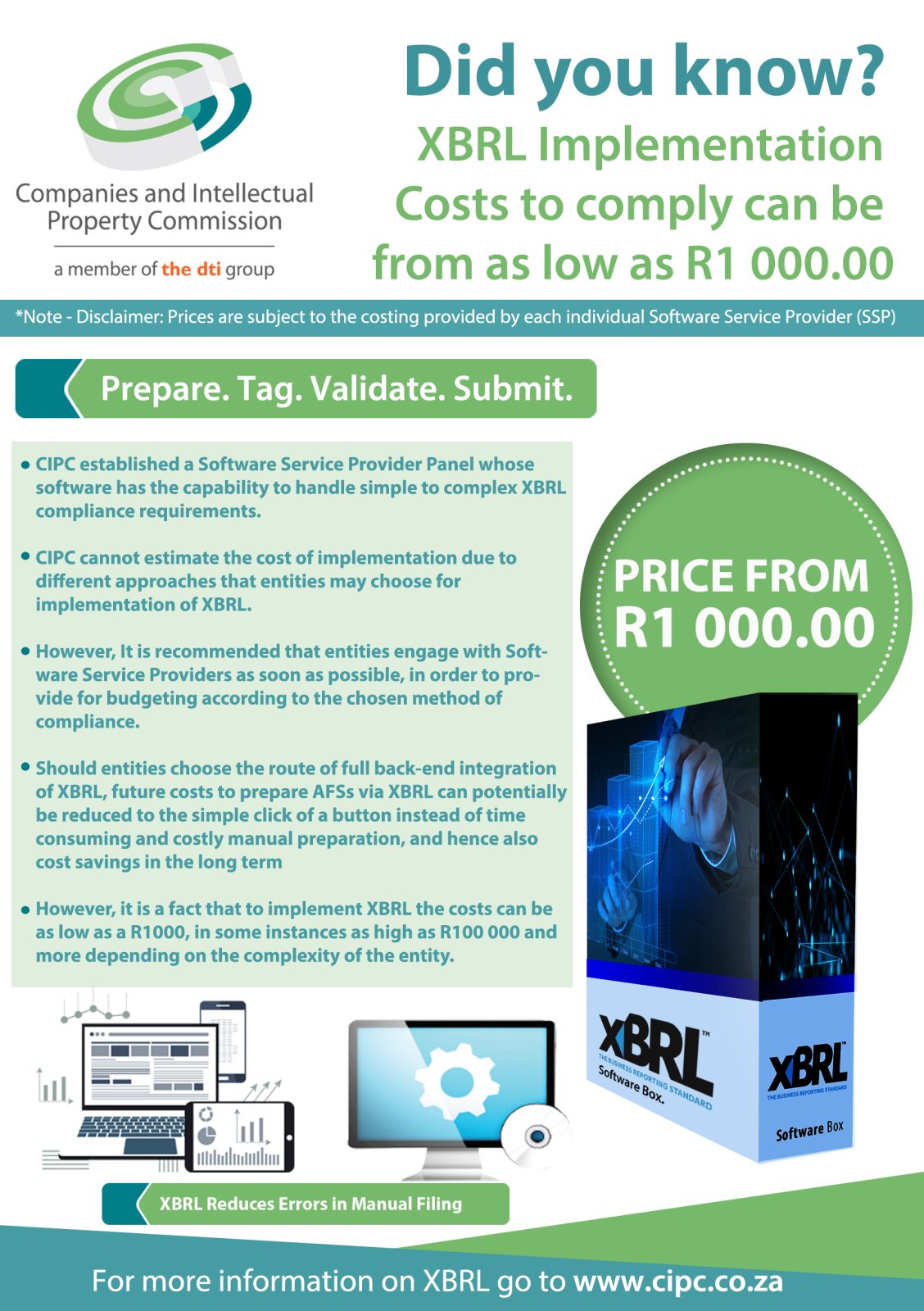
Since its inception in May 2011, the Companies and Intellectual Property Commission (CIPC) has been undergoing a sustained and rapid transformation in order to improve its service delivery and to contribute meaningfully to South Africa's developmental and economic needs. CIPC has come a long way from being an administrative organisation with little or no regulatory focus; an almost exclusively manual, paper-based process, resulting in capturing errors and lost documents; and plagued by outdated and unrealiable ICT infrastructure and ICT governance. Great strides have been made with the mordernisation of the organisation through the upgrading of its ICT infrastructure and the introduction of new and improved online services for company registration, name reservations, annual returns, director and member changes, financial year-end changes, address changes, and trademark, patent, design and copyright in film applications. CIPC plans to digitise all its business processes to ensure ease, speed of transacting and availability anywhere in the world, 24/7. Self-service terminals (SSTs) were introduced in Pretoria, Johannesburg and Cape Town, offering an opportunity for service delivery as they provide automated services that are linked to biometric verification of transacting parties. In 2014, an office providing a dedicated service to listed companies was established. CIPC has continued collaboration efforts with major banks such as FNB, ABSA and STD bank, key partners such as SARS, TRANSNET and DHA, to provide more integrated services and an increase in the choice of channels for improving the ease of doing business. CIPC is also honoured to host a One-Stop-Investment Centre for foreign nationals as a collaboration partner of InvestSA.

The mission of the Companies Tribunal is to adjudicate applications made in terms of Section 195 of the Companies Act (2008) and make orders in respect of such applications, and to facilitate the resolution of companies disputes through conciliation, mediation and arbitration. The Tribunal's mandate is to: adjudicate in relation to any application that may be made to it in terms of the Act and make any order provided for in the Act in respect of any such application; assist in the resolution of disputes; and perform any other function assigned to it by or in terms of the Act.

The mission of the Compensation Fund is to provide efficient, quality, client-centric and accessible Compensation for Occupational Injuries and Diseases (COID) services; sustain financial viability; and be an organisation that takes care of the needs of its staff to ensure effective service delivery. The Fund's strategic objectives are to provide effective and efficient client-orientated support services; and faster, reliable and accessible COID services by 2020.

The Competition Commission is empowered by the Competition Act to investigate, control and evaluate restrictive business practices, abuse of dominant positions and mergers in order to achieve equity and efficiency in the South African economy. Its purpose is to promote and maintain competition in South Africa in order to: promote the efficiency, adaptability and development of the economy; provide consumers with competitive prices and product choices; promote employment and advance the social and economic welfare of South Africans; expand opportunities for South African participation in world markets and recognise the role of foreign competition in the country; ensure that small- and medium-sized enterprises have an equitable opportunity to participate in the economy; and promote a greater spread of ownership, in particular to increase the ownership stakes of historically disadvantaged persons. To achieve its purpose, the Commission's core functions are the following: implement measures to increase market transparency; implement measures to develop public awareness of the provisions of the Act; investigate and evaluate alleged anti-competitive conduct; conduct formal inquiry in respect of the general state of competition in a market; grant or refuse applications for exemption from the application of the Act; authorise, with or without conditions, prohibit or refer mergers of which it receives notice; negotiate and conclude consent orders; refer matters to the Competition Tribunal of South Africa (the Tribunal) and appear before the Tribunal when required; negotiate agreements with any regulatory authority to coordinate and harmonise the exercise of jurisdiction over competition matters within the relevant industry or sector, and ensure the consistent application of the principles of the Act; participate in the proceedings of any regulatory authority; advise and receive advice from any regulatory authority; review legislation and public regulations, and report to the Minister concerning any provision that permits uncompetitive behaviour; and deal with any other matter referred to it by the Tribunal.

The Department of Science, Technology and Innovation (DSI) seeks to boost socio-economic development in South Africa through research and innovation. To achieve its goals, the Department provides leadership, an enabling environment and resources for science, technology and innovation. Through its programmes (administration, technology innovation, international cooperation and resources, research development and support, and socio-economic innovation partnerships) and several entities that work alongside it, the Department is accomplishing groundbreaking science and enhancing the well-being of all South Africans. The Department was renamed from the Department of Science and Innovation to the Department of Science, Technology and Innovation on 27 September 2024.
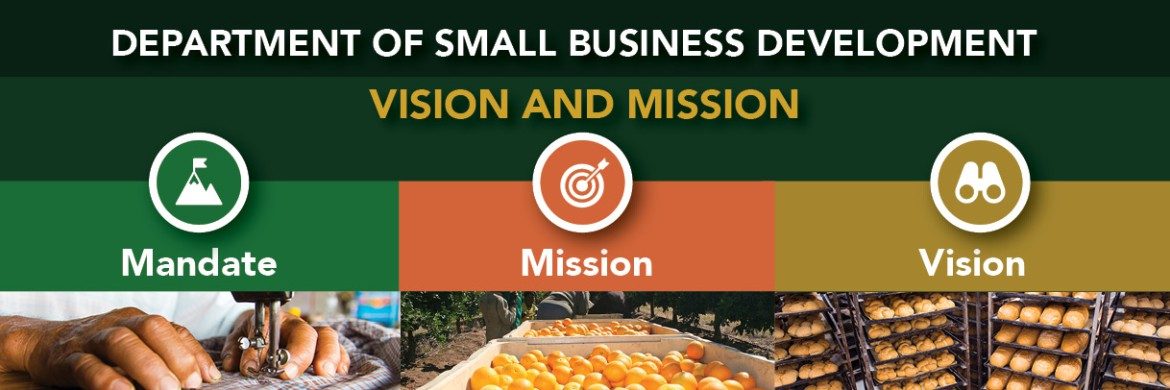
The mission of the Department of Small Business Development is to focus on enhanced support to small business and cooperatives, with an emphasis on programmes to advance entrepreneurship amongst women, the youth, and people with disabilities to contribute to job creation and economic growth. The Department's objectives are to: facilitate the development and growth of small businesses and cooperatives to contribute to inclusive and shared economic growth and job creation through public and private sector procurement; facilitate partnerships with all spheres of government as well as the private sector to ensure mutual cooperation that will benefit small businesses and cooperatives; advocate for a conducive regulatory environment for small businesses and cooperatives to enable access to finance, investment, trade equitable and market access in an and sustainable manner; and facilitate radical economic transformation through increased participation of small businesses and cooperatives in the mainstream economy.
Map View
15 locations