
Public Services & Government
358 results
Sub-categories
Get quotes from multiple providers
Describe your job once and compare quotes from Public Services & Government providers — no payment now.
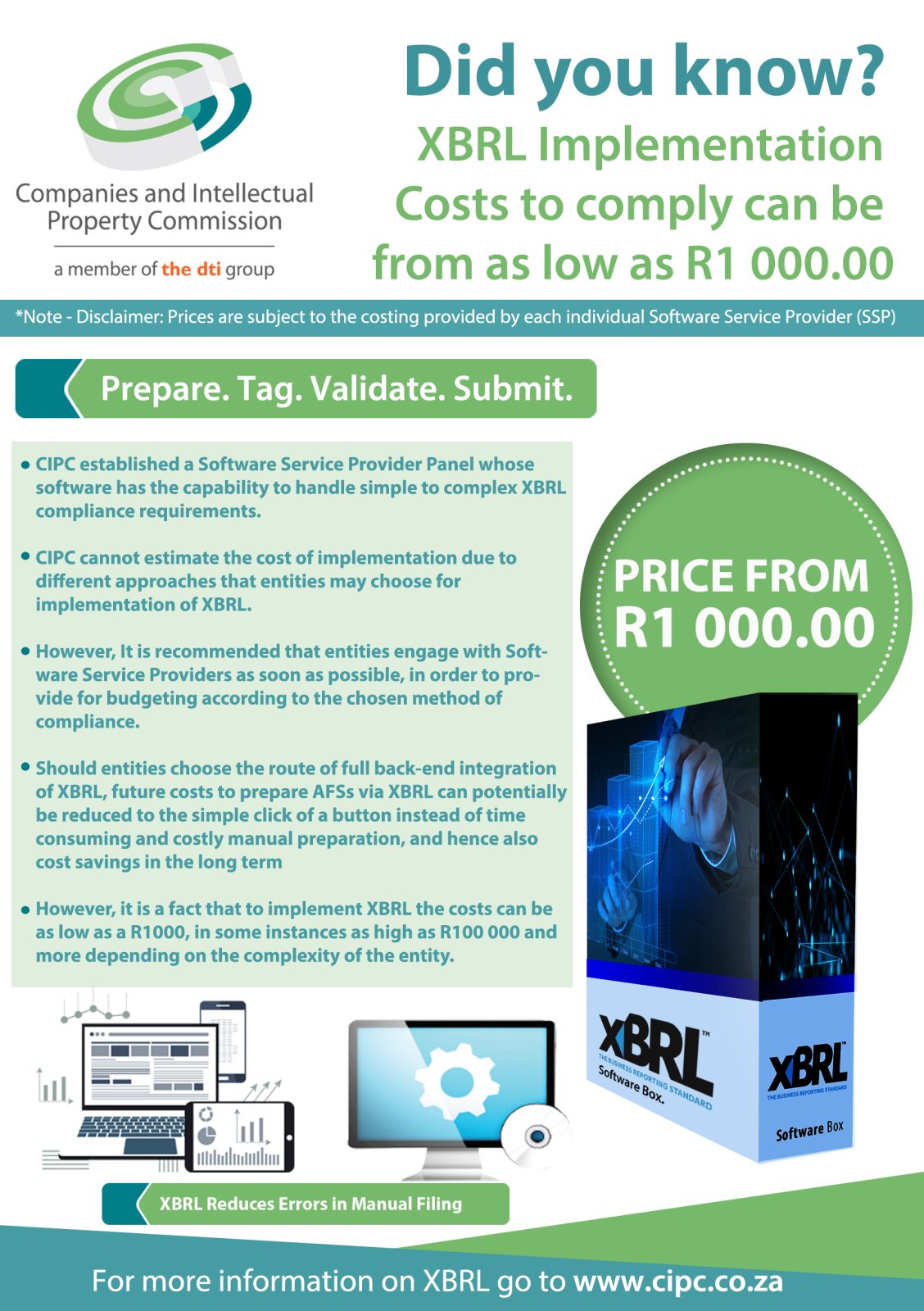
Since its inception in May 2011, the Companies and Intellectual Property Commission (CIPC) has been undergoing a sustained and rapid transformation in order to improve its service delivery and to contribute meaningfully to South Africa's developmental and economic needs. CIPC has come a long way from being an administrative organisation with little or no regulatory focus; an almost exclusively manual, paper-based process, resulting in capturing errors and lost documents; and plagued by outdated and unrealiable ICT infrastructure and ICT governance. Great strides have been made with the mordernisation of the organisation through the upgrading of its ICT infrastructure and the introduction of new and improved online services for company registration, name reservations, annual returns, director and member changes, financial year-end changes, address changes, and trademark, patent, design and copyright in film applications. CIPC plans to digitise all its business processes to ensure ease, speed of transacting and availability anywhere in the world, 24/7. Self-service terminals (SSTs) were introduced in Pretoria, Johannesburg and Cape Town, offering an opportunity for service delivery as they provide automated services that are linked to biometric verification of transacting parties. In 2014, an office providing a dedicated service to listed companies was established. CIPC has continued collaboration efforts with major banks such as FNB, ABSA and STD bank, key partners such as SARS, TRANSNET and DHA, to provide more integrated services and an increase in the choice of channels for improving the ease of doing business. CIPC is also honoured to host a One-Stop-Investment Centre for foreign nationals as a collaboration partner of InvestSA.
The mission of the Companies Tribunal is to adjudicate applications made in terms of Section 195 of the Companies Act (2008) and make orders in respect of such applications, and to facilitate the resolution of companies disputes through conciliation, mediation and arbitration. The Tribunal's mandate is to: adjudicate in relation to any application that may be made to it in terms of the Act and make any order provided for in the Act in respect of any such application; assist in the resolution of disputes; and perform any other function assigned to it by or in terms of the Act.

The mission of the Compensation Fund is to provide efficient, quality, client-centric and accessible Compensation for Occupational Injuries and Diseases (COID) services; sustain financial viability; and be an organisation that takes care of the needs of its staff to ensure effective service delivery. The Fund's strategic objectives are to provide effective and efficient client-orientated support services; and faster, reliable and accessible COID services by 2020.

The mission of the Eastern Cape Department of Sport, Recreation, Arts and Culture is to develop and promote sport, recreation, arts and culture for spiritual, intellectual, physical and material upliftment of the people of the Eastern Cape. The Department's strategic goals are: effective service delivery through leadership, good governance, accountability and efficient resource utilisation; development, promotion and transformation of arts, culture, museums, heritage, and language services in order to contribute to sustainable economic growth and opportunities, nation-building, good governance, and social and human capital development; provision of a free, equitable and accessible library and information service, and proper management and preservation of public and non-public records; and improvement of quality of life through sport and recreation.

The Competition Commission is empowered by the Competition Act to investigate, control and evaluate restrictive business practices, abuse of dominant positions and mergers in order to achieve equity and efficiency in the South African economy. Its purpose is to promote and maintain competition in South Africa in order to: promote the efficiency, adaptability and development of the economy; provide consumers with competitive prices and product choices; promote employment and advance the social and economic welfare of South Africans; expand opportunities for South African participation in world markets and recognise the role of foreign competition in the country; ensure that small- and medium-sized enterprises have an equitable opportunity to participate in the economy; and promote a greater spread of ownership, in particular to increase the ownership stakes of historically disadvantaged persons. To achieve its purpose, the Commission's core functions are the following: implement measures to increase market transparency; implement measures to develop public awareness of the provisions of the Act; investigate and evaluate alleged anti-competitive conduct; conduct formal inquiry in respect of the general state of competition in a market; grant or refuse applications for exemption from the application of the Act; authorise, with or without conditions, prohibit or refer mergers of which it receives notice; negotiate and conclude consent orders; refer matters to the Competition Tribunal of South Africa (the Tribunal) and appear before the Tribunal when required; negotiate agreements with any regulatory authority to coordinate and harmonise the exercise of jurisdiction over competition matters within the relevant industry or sector, and ensure the consistent application of the principles of the Act; participate in the proceedings of any regulatory authority; advise and receive advice from any regulatory authority; review legislation and public regulations, and report to the Minister concerning any provision that permits uncompetitive behaviour; and deal with any other matter referred to it by the Tribunal.

The mission of the Eastern Cape Department of Transport is to provide, facilitate, develop, regulate and enhance a safe, affordable and reliable multimodal transport system that is integrated with land uses to ensure optimal mobility of people and goods in support of socio-economic growth and development. The Department's strategic goals are to promote good governance and transportation excellence by providing enabling business processes for the core functions of the Department of Roads and Transport in relation to management, corporate and financial services; maximise mobility and accessibility through public transport by planning, regulating and facilitating the provision of public transport services and infrastructure, through own provincial resources and through cooperation with national and local authorities, as well as the private sector, in order to enhance the mobility of all communities, particularly those currently without or with limited access; integrate traffic management in order to enable and ensure that all road users consciously use the roads in a lawful and safe manner; create economic empowerment opportunities in the transportation sector and alleviate poverty by ensuring delivery of accessible services through integrated, socially just, developmental and empowering processes in order to improve the quality of life of communities by way of community development programmes.

The Competition Tribunal adjudicates competition matters, in accordance with the Act, and has jurisdiction throughout South Africa. It is independent and subject to the Constitution and the law. It must be impartial and perform its functions without fear, favour or prejudice. When a matter is referred to it in terms of the Act, the tribunal must: adjudicate complaints of prohibited conduct (restrictive practice and abuse of dominance); impose a remedy; award costs; grant an order for interim relief; authorise or prohibit a large merger; and adjudicate appeals from the Commission's decisions on intermediate mergers and exemptions.


Department of Higher Education and Training (DHET)

The mission of the Free State Department of Agriculture and Rural Development is, by partnering with relevant stakeholders, to leverage available resources and technologies to optimise productivity and accelerate economic growth in the agriculture sector. Its vision is ‘prosperous agriculture, farming our future'. The strategic goals of the Department are: increased profitable production of food and fibre products; effective regulatory services and risk management; transformed and demand-based education, training and development; sustained management of natural resources; improved, effective and efficient governance and stakeholder relations; and coordinated creation of vibrant, equitable and sustainable rural communities.

The mission of the Construction Industry Development Board (CIDB) is to drive enhanced delivery management, capacity improvement and contractor development in the construction industry through strategic interventions and partnerships. The Board's mandate is to: establish a national register of contractors and construction projects to systematically regulate, monitor and promote the performance of the industry for sustainable growth, delivery and empowerment; promote improved delivery management capacity and the uniform application of procurement policy throughout all spheres of government; promote improved performance and best practice of public and private sector clients, contractors and other participants in the construction delivery process; promote sustainable participation of the emerging sector; provide strategic direction and develop effective partnerships for growth, reform and improvement of the construction sector.

The objectives underlying the establishment of the Council for Geoscience (CGS) are to develop and publish world-class geoscience knowledge products and to render geoscience-related services to the South African public and industry. The mandate of the CGS includes: the systematic reconnaissance and documentation of the geology of the earth's surface and continental crust, including all offshore areas within the territorial boundaries of South Africa; the compilation of all geoscience data and information, particularly the geological, geophysical, geochemical and engineering-geological data in the form of maps and documents, which are placed in the public domain; basic geoscience research into the nature and origin of rocks, ores, minerals, formations, the history and evolution of life, and the formation of the Earth, with a view to understanding the geological processes of both the past and present, and to compile and publish such research findings nationally and internationally to contribute to the understanding of the Earth, its evolution and its resources; and the collection and curation of all geoscience data and knowledge about South Africa in the National Geoscience Repository. This repository houses a large and growing collection of geoscience information on all the countries of the African continent. This information also includes data that was received from mining companies, universities and research institutions worldwide. Public access to all geoscience information is subject to: existing legislation, arranged through the mandate of the CGS; rendering of geoscience knowledge services and advice to the state to enable informed and scientifically-based decisions about the use of the Earth's surface and the Earth's resources, within the territory of South Africa; and management of a number of national geoscience facilities on behalf of the country. These include the National Seismograph Network, National Borehole-Core Repository, National Geoscience Heritage Collections (Geoscience Museum), and National Geoscience Library. As part of its seismological monitoring function, the CGS contributes to the verification of global compliance to the ban on underground, underwater and upper atmospheric nuclear explosions in terms of the Comprehensive Nuclear-Test-Ban Treaty (CTBT), by making data available from stations located on South African territory; and rendering commercial geoscience services and products to national and international clients. The Council for Geoscience is one of the national science council in the country. It is the custodian of all geoscientific information in South Africa.

The vision of the Free State Department of Community Safety, Roads and Transport is to contribute towards the creation of a prosperous Free State through the facilitation of the provision of sustainable community safety, mobility and road infrastructure. This is achieved by monitoring, overseeing and assessing police service delivery; promoting integrated crime prevention initiatives; and ensuring road safety and an integrated transport system and networks. The following are some of the key strategic objectives of the Department: monitor and evaluate the effectiveness and efficiency of service delivery by the South African Police Service (SAPS); develop and execute social crime prevention programmes at provincial and local level; build an efficient public transport infrastructure network; implement the contractor development strategy; focus on the Construction Industry Development Board (CIDB) grading; develop a public transport centre; ensure a culture of proper road traffic law compliance by road users; and enhance improved service delivery capacity by employing contractors utilising local labour.

Department of Higher Education and Training (DHET)
No map locations
These listings don't have coordinates yet.